
Table of Contents
- What Happens If Water Damage Is Ignored? The Short Answer
- How Water Damage Worsens Over Time: A Timeline
- Signs of Water Damage in a House
- How Long Can a Water Leak Go Unnoticed?
- Health Risks and Structural Damage From Ignored Water
- The Water Damage Restoration Process
- Does Insurance Cover Water Damage Restoration?
- Conclusion
- Frequently Asked Questions
Last Updated: October 19, 2026
What Happens If Water Damage Is Ignored? The Short Answer
Ignored water damage does not stay the same size. It spreads, soaks deeper, and gets more expensive to fix with every day that passes.
Here is the short answer. Untreated water damage leads to four things at once:
- Mold growth that starts within days in damp materials
- Structural deterioration of wood, drywall, and framing
- Electrical hazards when moisture reaches wiring and outlets
- Repair costs that climb far past the original problem
A slow leak under a sink can run for weeks before anyone notices. By then, the damage is no longer cosmetic.
Below, we break down the timeline, the warning signs, the health risks, and what to do first. We also cover how insurance claims work, because that part surprises most homeowners.
How Water Damage Worsens Over Time: A Timeline
Water damage follows a predictable clock, but the speed depends on the water category and the materials it touches. A clean-water supply line leak in a ventilated room behaves very differently from sewage backup trapped under vinyl flooring.
First 1 to 4 hours: Water wicks into drywall paper, wood grain, and carpet backing. Drywall absorbs water upward through capillary action, so a puddle on the floor can wet the wall several inches above the waterline. Materials swell.
First 24 to 48 hours: Mold spores, already present in almost every home, begin to colonize damp surfaces. The window most often cited is 24 to 48 hours before active growth starts on wet building materials.
Days 3 to 7: Visible mold colonies appear on drywall, framing, and carpet. Wood rot fungi establish in framing that stays above roughly 20 percent moisture content. Drywall crumbles when touched. Subflooring delaminates.
Weeks 1 to 4: Structural wood loses strength as rot spreads along the grain. Joists and headers may need sistering or replacement. Drywall and plaster fail. Mildew spreads into adjacent rooms through shared wall cavities.
Beyond one month: Structural members can lose enough section to require engineering evaluation. Mold colonies release spores continuously. The cost profile changes from mitigation to rebuild, and insurance carriers increasingly treat the loss as maintenance-related rather than sudden.
How water category changes the clock. Clean water from a supply line is the most forgiving. Gray water, from a washing machine discharge, dishwasher, or toilet overflow without solid waste, carries bacteria and needs faster removal and antimicrobial treatment.
Why hidden moisture matters at every stage. Visible drying is not the same as structural drying. Water travels along joists, inside wall cavities, and under flooring where air movers cannot reach.
Signs of Water Damage in a House
The signs of water damage in a house are often subtle at first. Most homeowners miss them until the damage is well advanced. Watch for these:
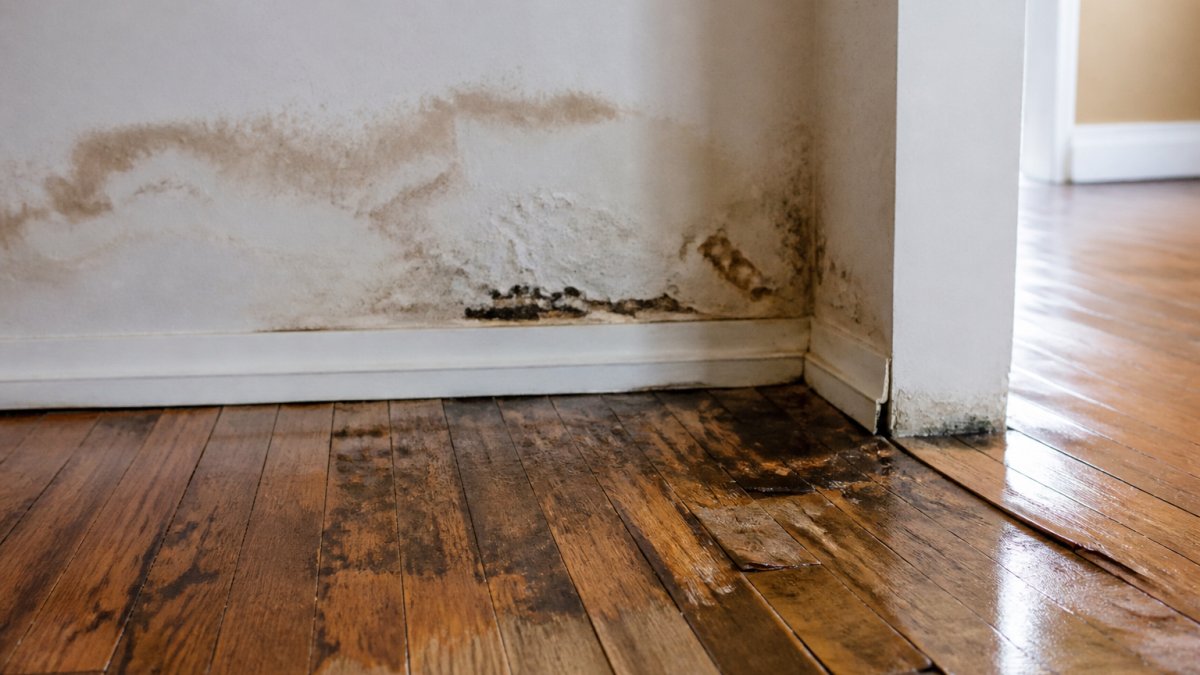
- Brown or yellow rings on ceilings and walls
- Bubbling, cracking, or peeling paint
- Soft or spongy spots in floors
- A persistent musty or earthy smell
- Warped baseboards or door frames that no longer close
- Stained or sagging drywall
- Unexplained spikes in your water bill
- Visible mold or dark speckling near grout and caulk
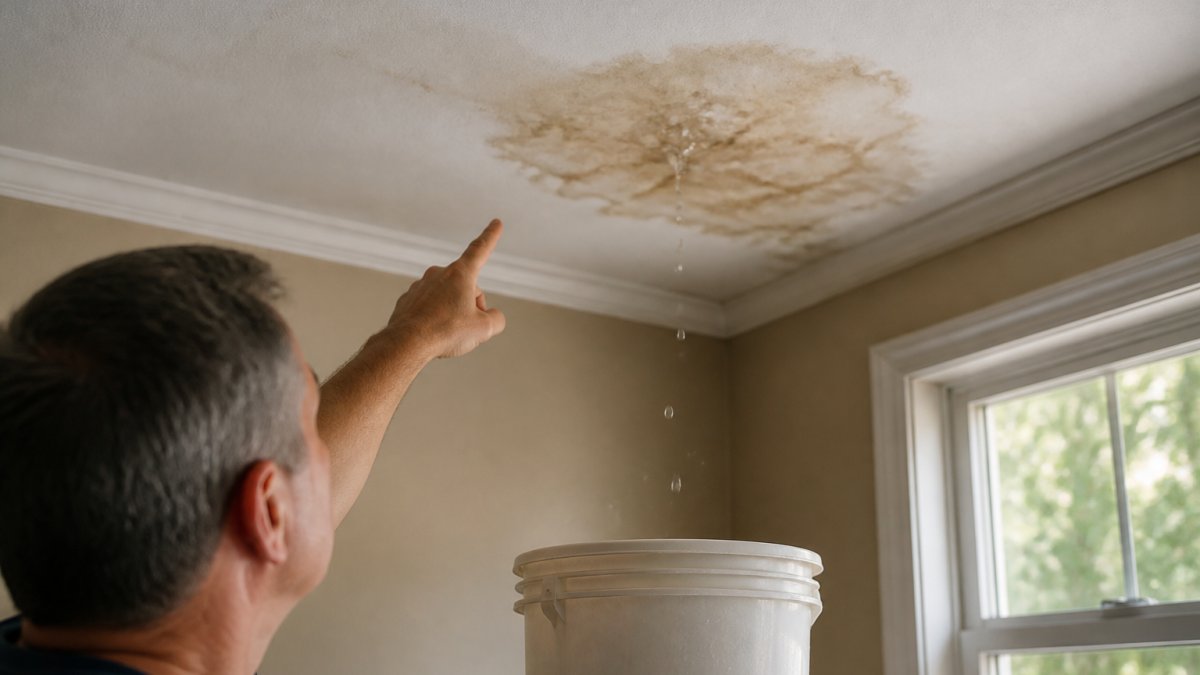
Hidden damage is the real problem. Water travels along joists and inside wall cavities where you cannot see it. A stain on the ceiling usually means the leak started somewhere else entirely.
We tell homeowners to trust their nose. If a room smells damp and you cannot find the source, there is moisture in the building materials.
How Long Can a Water Leak Go Unnoticed?
A water leak can go unnoticed for weeks or even months, especially a small one. Slow drips under sinks, behind appliances, and inside walls often stay hidden until secondary damage appears.
The common hiding spots we find:
- Under kitchen and bathroom sinks
- Behind the washing machine and dishwasher
- Around toilet bases and supply lines
- Inside walls fed by a leaky roof
- Under slab foundations from a ruptured pipe
A small leak is quiet. It does not flood a room, so nobody looks. Meanwhile, moisture builds in the drywall and framing, and mold growth begins.
Leak detection matters more than most people think. Check under sinks monthly. Look for rust or corrosion on supply lines. Watch for soft spots near appliances. A ruptured pipe is obvious; a pinhole leak is not.
Health Risks and Structural Damage From Ignored Water
Ignored water creates two problems at once: it harms the people living in the home and it harms the home itself.
Call the Expert Renovation Contractors Now →
Health risks. Mold growth releases spores into the air. For people with allergies, asthma, or weakened immune systems, that can trigger coughing, wheezing, and irritation. Damp conditions also encourage mildew and dust mites. The EPA guide to mold and moisture control recommends fixing the water source first, then drying materials thoroughly, because mold returns wherever moisture remains.
Structural damage. Wood rot weakens framing, joists, and subflooring. Drywall loses strength and crumbles. Insulation soaks up water and stops insulating, which raises energy bills. Warping pushes doors and windows out of square.
Electrical hazards. Moisture reaching wiring, outlets, or a breaker panel creates a shock and fire risk. This is the one we treat as urgent. If water is anywhere near electrical components, shut off power to that area before you touch anything.
The CDC guidance on mold cleanup and health is clear that damp building materials should be dried quickly, because mold can begin growing on wet surfaces in a short window.
The Water Damage Restoration Process
The water damage restoration process follows a set sequence. Skipping a step is how damage comes back.
- Stop the water source. Shut off the water supply or fix the leak before anything else.
- Assess and document. Photograph everything for the insurance claim.
- Remove standing water. Extract water from floors and carpets.
- Dry and dehumidify. Use air movers and dehumidifiers to pull moisture from materials.
- Check for hidden moisture. Use moisture meters on walls, ceilings, and subfloors.
- Remove damaged materials. Cut out drywall and insulation that cannot be saved.
- Clean and treat. Address mold and mildew before rebuilding.
- Repair and restore. Replace materials and finish the space.
Professional restoration matters most at steps four through six. Hidden moisture is where DIY cleanup fails. A surface can feel dry while the framing behind it still reads wet on a meter.
| Stage | What Happens | Why It Matters |
|---|---|---|
| Stop the source | Shut off water, fix the leak | Damage keeps growing until this is done |
| Extract water | Remove standing water | Limits how deep moisture soaks |
| Dry and dehumidify | Air movers, dehumidifiers | Stops mold before it starts |
| Check hidden moisture | Meter walls, ceilings, subfloors | Catches damage you cannot see |
| Remove and restore | Cut out, clean, rebuild | Prevents recurrence |
B&G Home Improvement Inc. handles disaster restoration and the rebuild that follows.
Does Insurance Cover Water Damage Restoration?
Insurance often covers sudden water damage, but it usually excludes damage from long-term neglect. That distinction decides most claims, and it is decided by documentation.
Typically covered: a burst pipe, a sudden appliance failure, storm-driven water intrusion, or a roof leak caused by a storm event.
Often not covered: slow leaks you should have caught, repeated seepage, and damage from poor maintenance. Most policies also exclude flooding from outside the home, which requires separate flood coverage through the National Flood Insurance Program or a private carrier.
Why documentation decides the claim. Adjusters look for evidence the damage was sudden and that you acted to limit it. The homeowner's duty to mitigate, to prevent further damage after a loss, is written into most policies. That means the steps you take in the first day matter as much as the photos you take.
What to document, and how:
- Photograph and video before cleanup. Capture wide shots of the room, close-ups of the source, and moisture meter readings if you have them. Timestamped photos on a phone are acceptable.
- Keep a written log. Note the date and time you discovered the water, when you shut off the source, and when mitigation began. Adjusters use this to establish the loss timeline.
- Save receipts for emergency mitigation. Water extraction, fans, dehumidifier rental, and any emergency repairs are typically reimbursable as part of the claim. Keep every receipt.
- Do not discard damaged materials before inspection. Pile removed drywall, flooring, and insulation where the adjuster can see it. Without evidence, a claim can be reduced or denied.
- Get a written scope of work. A restoration contractor's scope, with moisture readings, affected areas, and recommended drying plan, gives the adjuster a defensible basis for the estimate.
- Report promptly. Most policies require prompt notice. Delays invite the argument that you failed to mitigate.
How repair costs scale. The financial stakes are the reason documentation matters. A clean-water supply line leak caught in the first day is often a drying and minor drywall repair job. The same leak discovered after a week typically adds mold remediation, removal of wet drywall and insulation, and possibly framing repair. After a month, the scope can include structural repair and full reconstruction of the affected room.
The flood versus pipe distinction. Standard homeowners policies treat rising water from outside the home differently from a burst pipe inside it. The FEMA flood insurance guidance explains why flood coverage is separate and why homeowners in low- or moderate-risk zones should not assume their policy covers surface flooding.
Conclusion
Ignored water damage is a slow, expensive problem that rarely stays contained. Mold, wood rot, electrical hazards, and rising repair costs all trace back to the same window of time: the first day or two after water gets in.
If you are dealing with a leak, a stain, or a damp smell you cannot place, do not wait for it to get worse. B&G Home Improvement Inc. is locally owned and staffed, and we handle disaster restoration and the rebuild that follows. Our team finishes the work within the agreed time frame. Call our expert renovation contractors now to get your home dry and back to normal.
Frequently Asked Questions
What happens if water damage is left untreated?
Untreated water damage spreads. Within 24 to 48 hours, moisture can reach drywall, insulation, and wood framing. Mold growth can start on wet materials in as little as 24 to 48 hours, and wood rot and structural deterioration follow over weeks and months. Electrical hazards develop if water reaches outlets or wiring. What starts as a small leak can become costly repairs and, in some cases, a denied insurance claim if the damage is seen as neglected.
How long can a water leak go unnoticed?
A slow leak can go unnoticed for weeks or even months, especially if it is behind a wall, under a floor, or in a basement. Common signs include a sudden jump in your water bill, musty odors, bubbling paint, or a soft spot in the floor. Because hidden moisture spreads, a leak that runs for weeks can cause hidden damage to insulation, drywall, and wood framing before you see a single stain.
Can ignored water damage cause mold?
Yes. Mold and mildew need moisture to grow, and wet building materials give them exactly that. Mold growth can begin within 24 to 48 hours of water intrusion, and it spreads through the air as spores. Health risks include allergy-like symptoms, asthma flare-ups, and respiratory irritation. If you smell a musty odor or see discoloration, have the area checked for hidden moisture before mold takes hold.
Does insurance cover water damage restoration?
It depends on the cause. Most homeowners policies cover sudden and accidental water damage, such as a ruptured pipe or a leaky roof from a storm, but they typically exclude long-term neglect and gradual leaks. Flooding usually requires a separate flood policy. Document the damage with photos and keep receipts. Review your policy and talk to your insurer before repairs begin, because how quickly you respond can affect your claim.