
Quick Summary
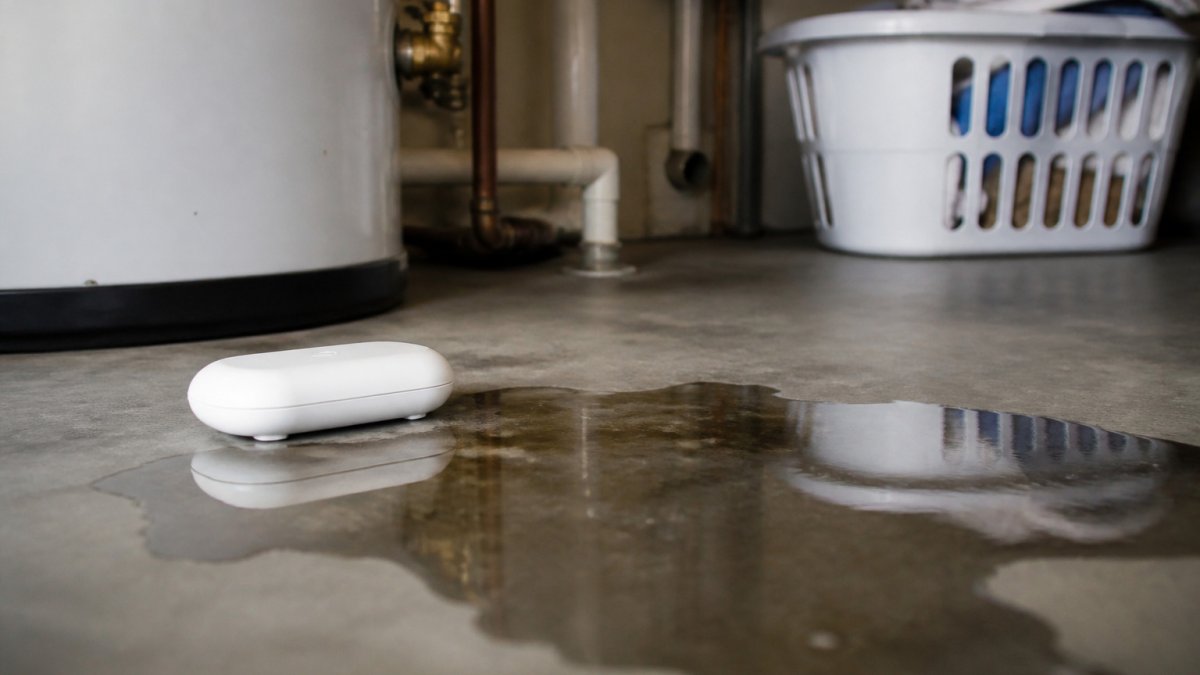
Smart leak detectors are small battery-powered sensors placed on the floor near water-prone spots that send a phone alert as soon as they detect moisture. They catch slow drips, failed hoses, and water heater leaks while the problem is still a small fix. Standalone sensors protect specific spots, while automatic shut-off valves stop water flow to the whole house.
- Place sensors at the lowest point near each risk, such as the water heater, under sinks, and behind toilets.
- Wi-Fi sensors suit renters and single rooms, while Zigbee or Z-Wave models reach farther through a mesh network.
- Shut-off valves cut water to the whole house and usually need professional plumbing installation.
- Ask for an installed quote on shut-off valves, since box prices may leave out installation items.
- Test each sensor with a damp cloth and replace batteries on a set schedule.
Table of Contents
- What Smart Leak Detectors Actually Do for Your Home
- What to Look for in a Water Leak Detector
- Automatic Shut-Off Valve vs. Standalone Sensor
- Top Smart Leak Detectors for Home Protection Compared
- How to Install Smart Water Leak Sensors
- Can a Leak Detector Lower Your Homeowners Insurance Premium?
- Privacy, Calibration, and Cold-Weather Freeze Protection
- Requesting a Quote for Water Damage Protection at Your Home
- Frequently Asked Questions
What Smart Leak Detectors Actually Do for Your Home
Smart leak detectors are small battery-powered sensors that sit on the floor near water-prone spots and send an alert to your phone the moment they detect moisture. Most homeowners only discover a leak after the floor is soft or the ceiling is stained, and that's exactly the gap these devices close. Learn the warning signs of water damage to spot problems sooner.
The useful part is timing. Waiting until you see damage usually means drywall, subfloor, or flooring replacement. See the hidden costs of ignoring water damage before you decide to wait.
Watch out: a sensor only protects the spot where it sits. Placing one by the water heater and one under the kitchen sink covers two risks, but a pipe running inside a wall will go unnoticed unless you add a sensor near it or a whole-home shut-off.
What to Look for in a Water Leak Detector
Start with the basics: a loud audible alarm, a low-battery indicator, and a probe that sits flat against the floor. Many devices also use a remote sensing cable, which lets you run a thin strip along a wall or behind an appliance.
Connectivity matters more than most shoppers expect. Wi-Fi models are the simplest to set up but depend on your router's range.
Check the IP rating too. An IP67 rating means the sensor tolerates temporary submersion, which suits basements and laundry rooms where splashes are common.
Automatic Shut-Off Valve vs. Standalone Sensor
A standalone sensor tells you about a leak. An automatic shut-off valve stops the water supply to your home when a leak is detected.
Sensors are cheaper and easier to install, and they work well for spot monitoring. Shut-off valves usually mount on the main water line and cut flow to the whole house, which limits damage while you're away on vacation or asleep.
Many homeowners pair the two: sensors at known risk points, plus a valve at the main line as a backstop.
Top Smart Leak Detectors for Home Protection Compared
Brand-by-brand rankings change quickly, and the best choice depends on your home's layout and existing smart-home setup. Rather than crown a single winner, this comparison organizes the market into four device classes and explains what each class generally does well and where it generally falls short. Pricing depends on quantity, model, and installation needs, so check current prices with the manufacturer or a provider.
Standalone Wi-Fi Sensors ($30-$70 each)
These are often the entry point for many households. A self-contained unit with a probe on the bottom and a Wi-Fi radio connects directly to your router and your phone app, no hub required. The trade-off is range: Wi-Fi at the far corner of a basement or behind a metal appliance can drop off, and each sensor occupies a slot on your router. Best for renters, single-room coverage, and anyone who wants to start small.
Hub-Based Sensors (Zigbee or Z-Wave, $20-$50 each plus $50-$150 hub)
These sensors often cost less per unit because they skip the Wi-Fi radio and talk to a hub instead. Zigbee and Z-Wave are mesh protocols, so each powered device in the network extends range for the others, a basement sensor can relay through a smart plug on the first floor to reach a hub on the second. They also keep working locally during an internet outage, which matters if your router reboots while you're away.
Automatic Shut-Off Valve Systems ($150-$600 for the valve, plus installation)
A shut-off valve mounts on the main water line and closes the supply when a linked sensor detects a leak. Some systems also monitor flow and pressure and can flag a burst pipe or a running toilet without any sensor at all. Installation is a plumbing job that depends on access and the type of valve, and some jurisdictions require a permit. Best for vacation homes, older plumbing, and anyone who wants the system to act, not just alert.
Combination Kits ($200-$500)
Several manufacturers sell a starter kit that bundles a shut-off valve with two to four sensors and a hub. These are often a practical way to get whole-home protection in one purchase, and they can simplify compatibility because the parts are designed to work together. The limitation is lock-in: adding a sensor later usually means buying from the same brand.
How to Compare Before You Buy
| Feature | Wi-Fi Sensor | Zigbee or Z-Wave Sensor | Shut-Off Valve |
|---|---|---|---|
| Typical unit price | $30-$70 | $20-$50 (plus hub) | $150-$600 (plus install) |
| Setup effort | Low | Medium (needs hub) | Higher (plumbing) |
| Coverage | Router-dependent | Mesh, wider reach | Whole house |
| Works during internet outage | No | Yes (local mesh) | Varies by model |
| Best for | Single rooms, renters | Multi-room systems | Away-from-home protection |
Some reviewers test each device a few ways, such as a damp-cloth trigger on the probe, a real drip from a supply line, and a false-alarm check with normal condensation on a cold pipe. Ask any manufacturer whose sensor you're considering how the device behaves in that third scenario, a sensor that alarms on condensation will get ignored, and an ignored sensor protects nothing.
Watch out: a low price on a shut-off valve may not include installation items such as a plumber, permit, or backflow preventer, so ask for an installed quote rather than comparing box prices.
Call the Expert Renovation Contractors Now →
How to Install Smart Water Leak Sensors
Installation is usually a 15-to-30-minute job. Start by pairing the sensor with your app or hub, then test it by placing a damp cloth across the probe to confirm the alarm sounds on your phone.
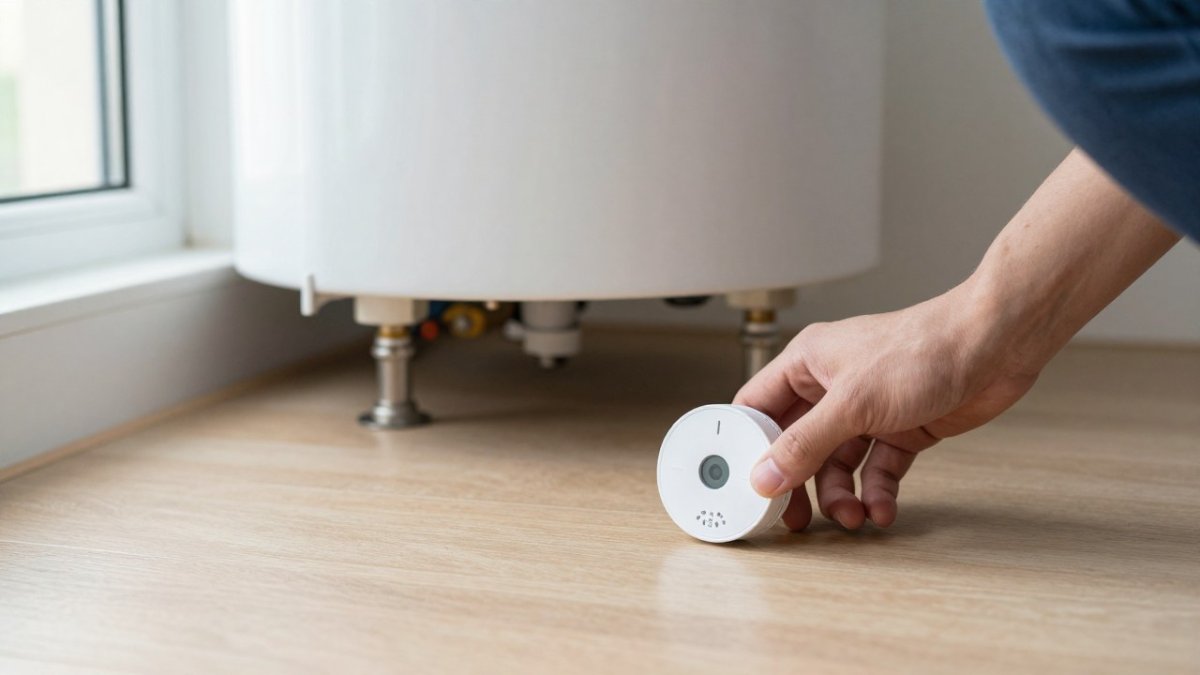
Place sensors on the floor at the lowest point near the risk: beside the water heater, under the sink, behind the toilet, and beneath the washing machine. Water runs downhill, so the floor is where a leak shows up first.
Here is a quick checklist:
- Pair the sensor and confirm it appears in your app
- Trigger a test alert with a damp cloth
- Mount or place it at the lowest point near each risk
- Set at least two notification methods
- Write the battery replacement date on the sensor
Many homeowners forget the last step and find a dead battery months later.
Can a Leak Detector Lower Your Homeowners Insurance Premium?
Some homeowners insurers offer a water-damage mitigation credit, but the discount is often not automatic. Understanding how the credit is structured can determine whether it applies to your policy.
How the Discount Is Usually Structured
Insurers generally recognize two device categories. The first is a leak detection system, one or more sensors that alert the homeowner. The second, and more heavily credited, is an automatic shut-off system that stops the water supply without human intervention. Credits for a shut-off system are often larger than those for standalone sensors, and the amount varies by insurer. Some carriers bundle the credit into a broader "smart home" or "protective device" discount that also covers monitored security and smoke detection.
What Insurers Typically Require as Proof
Before issuing a credit, most carriers ask for three things: the device manufacturer and model number, the installation date, and, for shut-off valves, proof of professional installation by a licensed plumber. Keep the receipt and the installer's invoice. Some carriers also require the device to be monitored by a central station or to send alerts to a professional monitoring service, which rules out a standalone sensor that only pings your phone. Ask your agent for the specific underwriting guideline in writing before you buy, because the requirement varies by carrier and by state filing.
Calculating the Real ROI
The device cost is only half the equation. A water-damage claim can lead to significant repair costs, plus the deductible, and possibly a premium increase at renewal. The larger return from a shut-off system is often avoiding the claim itself. Run the math both ways: the discount is a nice-to-have, and the claim avoidance is the actual reason to buy.
Questions to Ask Your Agent
- Does the credit apply to standalone sensors, or only to automatic shut-off valves?
- Is professional installation required, and does the installer need to be licensed in your state?
- Does the device need central-station monitoring, or is a phone alert sufficient?
- Is the credit a flat dollar amount or a percentage of a specific coverage?
- Does the credit need to be re-certified at each renewal?
Watch out: a discount quoted over the phone may not be the same as a discount applied to your policy, so ask for the credit to appear on your declarations page before you count on the savings.
Privacy, Calibration, and Cold-Weather Freeze Protection
Smart sensors send data to a cloud account, so review the app's privacy policy and turn on two-factor authentication. Choose devices that let you control what data is stored and how long it is kept.
Calibration drifts over time as sensors collect dust or corrosion on the probe. Wipe the probe and retest every few months, especially in damp basements.
Cold weather adds a different risk. Pipes in unheated crawl spaces or garages can freeze and burst, and a leak sensor placed there can warn you early.
Requesting a Quote for Water Damage Protection at Your Home
Sensors help you catch a leak early, but a damaged floor or wall still needs repair. If you're dealing with water damage now, B&G Home Improvement Inc. can assess the damage and explain your options. Learn about our water damage restoration service after a flood. Visit our website to request a quote for your project.
Frequently Asked Questions
What is the best smart water leak detector for my home?
The best choice depends on your home's layout and how you want to be alerted. For most single-family homes, a hub-based system with several battery-operated sensors near water heaters, washing machines, dishwashers, and under sinks gives broad coverage. If you want the system to stop water on its own, pair the sensors with an automatic shut-off valve on the main water line. Check that the sensors work with your existing smart home hub or app before buying, and confirm the battery life and IP67 rating for the locations you plan to use them.
Do smart leak detectors require a professional installation?
Most battery-operated leak sensors are designed for do-it-yourself installation. You place them on the floor near likely leak sources, pair them with a hub or app, and test them with a small amount of water. An automatic shut-off valve is more involved because it is installed on the main water line, and many homeowners hire a licensed plumber for that step. If you are unsure about cutting into supply lines or meeting local plumbing requirements, a licensed plumber can handle the valve while you set up the sensors yourself.
Can smart leak detectors help lower my homeowners insurance premiums?
Some insurers offer a discount for devices that detect or stop water leaks, but the amount and eligibility vary by company, state, and policy. Ask your agent whether they recognize smart leak sensors or automatic shut-off valves and what documentation they require, such as installation photos or a device model number. Keep a record of the device and its installation date. A discount is not guaranteed, so compare the potential savings against the cost of the equipment and installation before deciding.
How do Wi-Fi-enabled leak detectors alert you during an emergency?
Wi-Fi leak detectors usually send push notifications to a smartphone app when they sense moisture, and many also send email or text messages. Some models sound a local audible alarm so anyone nearby can respond. Alerts depend on your home internet connection and your phone's notification settings, so confirm that alerts are enabled and test the system periodically. For a sensor that stays connected during an internet outage, look for a model that uses a hub or cellular backup.
