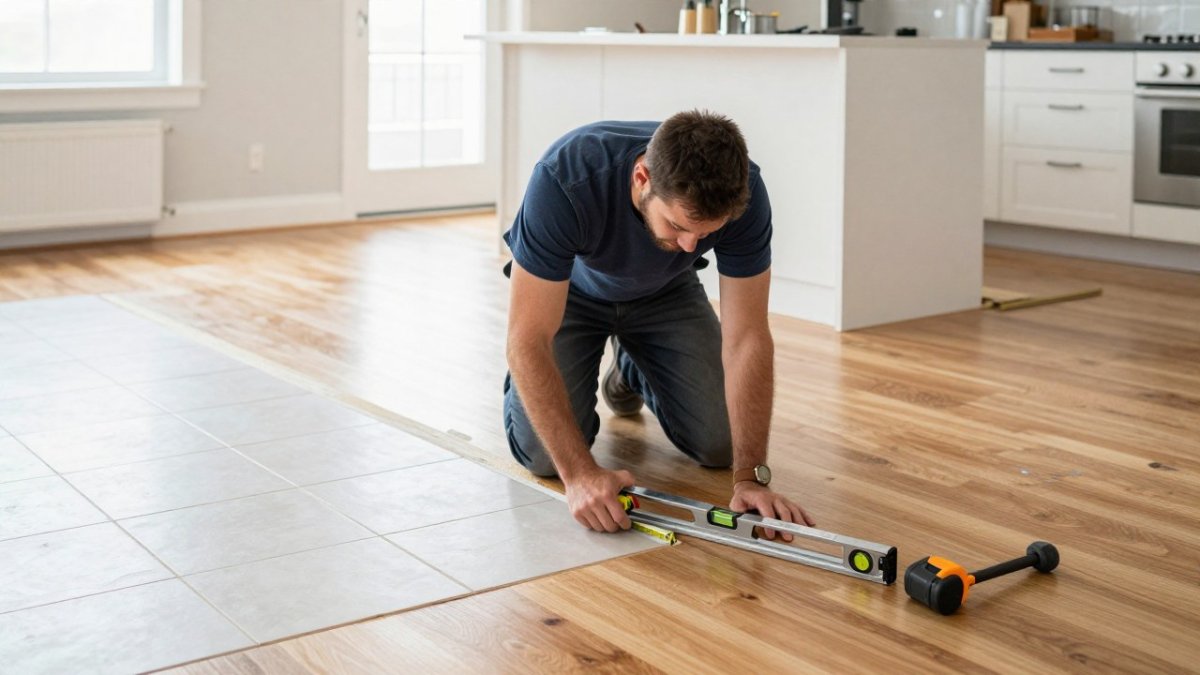

Last Updated: November 14, 2026
Quick Summary
Luxury vinyl plank is the best all-around flooring for open plan kitchens, offering a water-resistant core, high wear layer, and one continuous run from kitchen to living room. Engineered wood is the best upgrade for real timber, and porcelain tile is best for heavy cooking and spills.
- Solid hardwood cups and gaps near sinks and dishwashers because it reacts to humidity changes.
- Porcelain tile handles standing water well but is hard and cold underfoot.
- Ask for the wear-layer thickness before buying LVP, since thin layers scratch within a year.
- LVP usually beats LVT in open concepts because long planks pull the eye between zones.
- Place floor transitions under a beam, at the island edge, or where the ceiling changes.
Table of Contents
- Why Open Plan Kitchens Demand a Different Flooring Decision
- The 7 Best Flooring Options for Open Plan Kitchens Compared
- LVP Flooring: The Water-Resistant Workhorse for Busy Households
- LVT Flooring vs. LVP: Which Format Fits Your Layout
- Planning an Open-Concept Kitchen to Living Room Floor Transition
- When Different Flooring in Open-Plan Rooms Makes Sense
- Choosing Your Flooring With a Local Remodeling Contractor
- Frequently Asked Questions
Why Open Plan Kitchens Demand a Different Flooring Decision
An open-concept kitchen is one of the most requested layouts in American homes, and it is also the hardest room in the house to floor.
The kitchen wants water resistance and durability. The living room wants warmth, quiet, and a finish that matches the furniture. Pick for one and you usually compromise the other.
There is a second factor most guides skip. The U.S.
Below, we compare seven materials against the same criteria: spill performance, durability, comfort underfoot, and how each one handles a continuous run from kitchen to living room.
The 7 Best Flooring Options for Open Plan Kitchens Compared
Here is the short answer. Luxury vinyl plank is the best all-around choice for most open plan kitchens, engineered wood is the best upgrade for homeowners who want real timber, and porcelain tile is the best for heavy cooking and spills. The table below compares all seven materials on spill performance, durability, comfort, maintenance, and relative installed cost.
| Material | Spill Performance | Durability / Wear | Comfort Underfoot | Maintenance | Relative Installed Cost | Best For |
|---|---|---|---|---|---|---|
| Luxury vinyl plank | Waterproof core; stands up to standing water | High wear layer resists scratches and dents; not refinishable | Warm, forgiving | Damp mop; no sealing | Low to moderate | Busy families, pets, one-floor runs |
| Engineered wood | Moderate; damp-mop only, wipe spills quickly | Real wood surface can be refinished; core resists movement | Warm, firm | Damp mop; occasional refinish | Moderate to high | Homeowners wanting real wood |
| Solid hardwood | Poor near sink and dishwasher | Can be refinished multiple times; dents and cups with moisture | Warm, firm | Damp mop; periodic refinish | High | Low-moisture, adult households |
| Porcelain tile | Excellent; impervious to standing water | Very hard; resists dents, but cracks if subfloor flexes | Hard and cold | Sweep and mop; grout needs sealing or deep cleaning | Moderate to high | Heavy cooking, spill zones |
| Natural stone | Good with sealing; stains and etches if sealer fails | Hard but can chip; softer stones etch | Hard, variable | Seal and reseal on schedule | High | High-end, low-traffic spaces |
| Cork | Good with sealing; swells if water sits | Dents under heavy furniture; resilient underfoot | Softest available | Seal; avoid standing water | Moderate | Quiet, comfort-first homes |
| Bamboo | Moderate; strand-woven resists water better than standard | Hard and dent-resistant when strand-woven | Firm, warm | Damp mop; quick spill cleanup | Moderate | Eco-conscious buyers |
Hardwood and Engineered Wood
Wood is the emotional favorite, and engineered wood is the smarter version of it. A solid hardwood plank reacts to humidity changes, which is why it cups and gaps near a dishwasher or sink.
Hardwood works well in an open plan when the kitchen zone is small and the household is careful. It is a poor fit for homes with toddlers, large dogs, or a leaking dishwasher, and it transfers sound into the living room.
Solid hardwood sits at the top of the wood category on installed cost; engineered wood lands below it but above vinyl and laminate. Lifespan is long for both, but only if moisture stays controlled.
Skip if: the kitchen is a high-traffic zone with kids or pets.
Porcelain and Ceramic Tile
Tile performs well on spill resistance but is less comfortable underfoot. Porcelain is denser and less porous than ceramic, so it handles standing water, dropped pans, and daily mopping well.
The trade-off is underfoot. Standing on tile for an hour of meal prep is hard on the back, and in an open plan the same hard surface runs into the living room.
Porcelain typically requires more substrate prep, membrane, and grout than vinyl, and pricing depends on the scope of your project. Contact B&G Home Improvement Inc. or visit our website for a current quote.
Best for: heavy cooks, spill-prone kitchens, and warm climates. Skip if: comfort underfoot is a priority in the living area.
Natural Stone: Slate, Marble, and Limestone
Natural stone delivers a distinctive look, and it demands regular care. Slate is tough and slip-resistant. Marble is beautiful and stains easily, especially from acidic foods like tomato sauce and citrus. Limestone is softer and etches when liquids sit on it.
Every natural stone floor needs sealing, and in a kitchen it needs resealing on a schedule. Skip the sealer and a spilled glass of red wine becomes a permanent mark.
Installed cost for stone is generally high, and pricing depends on the project scope.
Best for: high-end remodels where looks lead the decision. Skip if: you want low maintenance or have a busy household.
Cork and Bamboo
Cork and bamboo are the two eco-friendly options, and they behave very differently. Cork is the softest floor on this list, warm and quiet underfoot, which makes it a natural fit for open plan acoustics. It dents under heavy furniture and needs sealing against moisture.
Bamboo is a grass, not a wood, and strand-woven bamboo is the dense version worth considering, harder than many hardwoods and dent-resistant.
Both sit in the moderate installed-cost band, below stone and hardwood but above vinyl. Cork has the shorter practical lifespan in a wet kitchen; strand-woven bamboo holds up longer if spills are wiped promptly.
Best for: cork for quiet, comfortable homes; bamboo for eco-conscious buyers who want hardness. Skip if: the kitchen sees frequent standing water.
LVP Flooring: The Water-Resistant Workhorse for Busy Households
Luxury vinyl plank is the most practical answer for most open plan kitchens, and it is not close.
That continuous run is the real advantage. There are no grout lines to scrub, no sealing schedule, and no risk of a spilled pot warping the floor.
What most guides miss is the wear layer. A thin wear layer looks fine on day one and shows scratches within a year in a busy household.
Best for: families with kids and pets, and anyone who wants one floor throughout. Skip if: you want a floor that can be sanded and refinished decades from now.
LVT Flooring vs. LVP: Which Format Fits Your Layout
LVT and LVP are the same material in different formats, and the choice comes down to layout. Luxury vinyl tile (LVT) comes in square or rectangular tiles that mimic stone or ceramic. Luxury vinyl plank (LVP) comes in long planks that mimic wood.
For an open concept, LVP usually wins. Long planks run in one direction and pull the eye from the kitchen into the living room, creating visual flow. LVT in a stone pattern suits a kitchen zone you want to read as separate, but the tile grid can chop up a large open space.
Both formats share the same waterproof core and easy cleaning. The decision is aesthetic, not performance.
Planning an Open-Concept Kitchen to Living Room Floor Transition
A flooring transition is the point where one material meets another, and in an open plan it is the detail that makes or breaks the room.
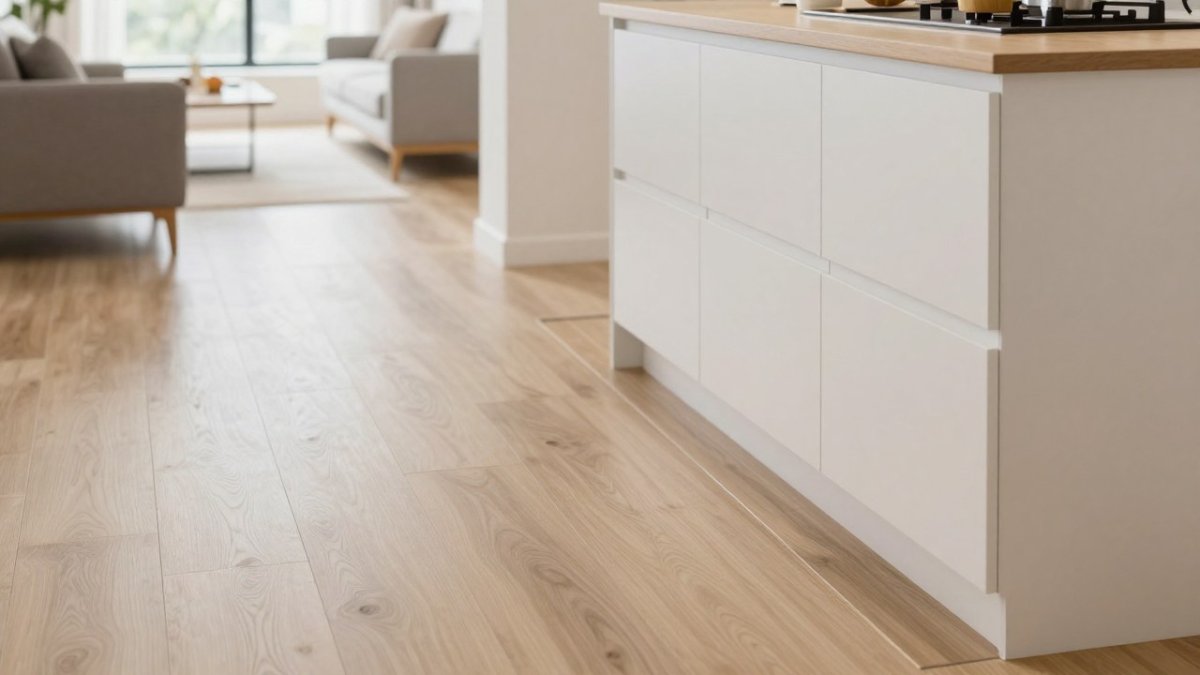
Start with the subfloor. Both materials need a flat, sound base, but they tolerate imperfection differently.
Plan finished floor height before you buy. Tile with backer board and thinset often finishes higher than vinyl plank or engineered wood.
Respect expansion gaps. Wood, bamboo, and laminate move with humidity, and vinyl expands and contracts with temperature.
Choose the strip to match the job. A T-molding bridges two floors at the same height. A reducer steps down from a thicker floor to a thinner one. A threshold works at a doorway.
Think about sound while you are at it. Hard surfaces in an open plan carry footfall and kitchen noise into the living area.
Three rules keep a transition clean:
- Line it up with architecture. Place the transition under a beam, at the edge of the island, or where the ceiling changes. Never run it through open floor.
- Match the height. A flush reducer strip keeps the two floors level and removes a trip hazard.
- Repeat a color. Pull one tone from the kitchen floor into the living room floor so the two materials feel related.
When Different Flooring in Open-Plan Rooms Makes Sense
Two floors in one open plan can work, and sometimes it is the better call. The trick is to make the change deliberate rather than accidental.
Different flooring in open-plan rooms makes sense when the kitchen is a defined zone, when one half of the room sits over a concrete slab and the other over a wood subfloor, or when a homeowner wants tile in the cooking area and carpet or wood in the living area. The transition rules above still apply, and the two materials should share a color family.
What fails is a random split. If the change does not follow a wall, a beam, or a clear zone, the room reads as unfinished.
Choosing Your Flooring With a Local Remodeling Contractor
The material is half the decision. The installer is the other half, and in an open plan the installation details decide whether the floor looks seamless or patched.
Before you hire, ask three questions: How will you prepare the subfloor? Where will the transition land? What happens if a plank is damaged in two years? Our guide on what to ask a kitchen contractor before hiring covers the full list.
If your kitchen is on the small side, flooring options for small kitchens narrows the choices further. And for the durability data behind each option, our breakdown of the best kitchen flooring materials for durability goes deeper.
At B&G Home Improvement Inc., we are locally owned and staffed, and we start every project with an in-depth consultation to match the floor to your taste and budget. You can see how to choose a local remodeler in seven steps, or book a consultation with our remodeling team to walk your space and talk through the transition plan.
An open plan kitchen only feels finished when the floor runs as one continuous surface. If you are weighing materials and want a straight answer for your layout, B&G Home Improvement Inc. can help.
Frequently Asked Questions
What is the best flooring for an open plan kitchen and living room?
There is no single winner, but luxury vinyl plank is a practical pick for many households and can run continuously from the kitchen into the living room. Porcelain tile wins on spill and stain resistance if you cook heavily. Engineered wood suits homeowners who want real wood and are willing to wipe up spills quickly. The right choice depends on how the room is used, your budget, and whether you want one continuous floor or a deliberate transition.
Is LVP or tile better for an open plan kitchen?
LVP flooring is warmer and softer underfoot, quieter, and easier on standing legs during long cooking sessions, which matters when the kitchen opens onto a living area. Tile handles standing water, spills, and heavy traffic better and will not dent or scratch from dropped pans. If your kitchen sees daily splashes and you want low maintenance, choose porcelain tile. If comfort and a seamless look into the living room matter more, choose LVP.
Should an open-plan kitchen and living room have the same flooring?
Continuous flooring is the simplest way to create visual flow, and it makes an open-concept space feel larger. Running one material throughout also removes trip hazards and awkward transition strips. That said, different flooring in open-plan rooms can work well when the kitchen sees heavy spills: a water-resistant material in the cooking zone and a warmer floor in the lounge area, joined with a flush transition strip at a natural boundary like an island or beam.
Can hardwood flooring work in an open-plan kitchen?
Yes, with caveats. Engineered wood handles moisture swings better than solid hardwood and can be refinished. Real wood adds warmth and resale value, but standing water, dishwasher leaks, and dropped ice will stain or cup the boards if left sitting. Seal it well, use mats at the sink and dishwasher, and wipe spills promptly. In a busy household with young children or pets, wood-look flooring or LVP gives you the same appearance with far less risk.
