
Last Updated: November 5, 2026
Quick Summary
Bathroom permit requirements for plumbing changes depend on whether the work is a repair or an alteration. Repairing or replacing a fixture in its existing location usually needs no permit, while moving, adding, or rerouting supply or drain lines usually does. Your local building department sets the final rules, so confirm before starting.
- Repairs keeping the same layout and pipe routes usually skip the permit.
- Moving, adding, or rerouting supply or drain lines usually requires a permit.
- Like-for-like toilet replacement in the same location usually needs no permit.
- Rough-in inspection must pass before walls, floors, or ceilings are closed.
- Starting work before the permit is issued can be treated as unpermitted work.
Table of Contents
- Why Bathroom Plumbing Changes Trigger Permit Rules
- Do I Need a Permit to Replace a Toilet?
- A Decision Tree for Common Bathroom Plumbing Work
- Permit to Move Bathroom Plumbing: What Counts as Relocation
- The Bathroom Remodel Permit Process, Step by Step
- Bathroom Plumbing Inspection Checklist for Homeowners
- Booking Your Bathroom Project With B&G Home Improvement Inc.
- Frequently Asked Questions
Why Bathroom Plumbing Changes Trigger Permit Rules
Most homeowners assume a permit only matters for a full gut remodel.
The core issue is alteration versus repair. Repairing an existing fixture in its current location usually sits outside permit rules.
- Repairs keep the same layout and the same pipe routes
- Alterations add, move, or reroute supply or drain lines
- Structural or wall changes often pull plumbing into the review
Permit rules are set locally, which means they vary by city and county. Your local building department is the final authority on what needs a permit.
Do I Need a Permit to Replace a Toilet?
In most cases, replacing a toilet in the same location with a like-for-like fixture does not need a permit.
The answer changes if you move the toilet. Relocating the drain or running new waste piping typically requires a permit and inspection.
Check with your local building department before you start. A quick phone call can save you a failed inspection later.
A Decision Tree for Common Bathroom Plumbing Work
Use this simple sequence to sort your project:
- Is the work only a repair to an existing fixture or pipe in the same spot? If yes, a permit is often not needed.
- Are you moving, adding, or rerouting any water supply or drain line? If yes, plan on a permit.
- Are you changing walls, floors, or the bathroom layout alongside the plumbing? If yes, expect a permit.
- Are you unsure? Call your local building department and describe the exact work.
Repairs that usually skip the permit
- Fixing a leaking faucet or shower valve in place
- Replacing a worn toilet flapper, fill valve, or wax ring
- Clearing a blocked drain with a snake or plunger
- Swapping a showerhead or handle
These jobs keep the existing layout. They rarely trigger review, though local rules still apply.
Changes that almost always need one
- Moving a sink, toilet, or shower to a new location
- Adding a new fixture or a second sink
- Running new supply or drain lines through framing
- Changing the size or path of a vent pipe
These changes affect how the system works, so most departments require review and inspection.
Permit to Move Bathroom Plumbing: What Counts as Relocation
Relocation means any change that moves water or waste to a new point. For a step-by-step explanation of moving a toilet, see how to move a toilet.
Ask yourself one question: does the fixture connect to a different pipe or a different spot in the wall? If the answer is yes, you likely have a relocation.
The Bathroom Remodel Permit Process, Step by Step
Most building departments follow a recognizable sequence, even though the details vary by jurisdiction. Knowing what each stage involves helps you plan around review times and inspection windows instead of discovering them mid-project.
1. Confirm the authority having jurisdiction
Before you fill out anything, identify which office issues the permit. For a single-family bathroom, that is usually the city or county building department, but some areas delegate plumbing permits to a separate plumbing division or a consolidated permitting center. Call the main building line and ask two questions: which permit type covers a bathroom plumbing alteration, and whether plumbing and building permits are filed separately or as one combined application.
2. Assemble the application and scope description
Most applications ask for the property address, owner information, contractor license number (if a licensed plumber or remodeler is pulling the permit), a plain-language scope of work, and an estimated project valuation. The valuation matters because many departments calculate the permit fee as a base amount plus a rate per dollar of declared value. Understating valuation to lower the fee is a common shortcut that can backfire if the inspector flags the discrepancy during review.
3. Submit plans or sketches
For a like-for-like fixture swap, many departments accept a simple sketch or even a written description. For work that moves a drain, adds a fixture, or reroutes a vent, expect to submit a floor plan showing fixture locations, pipe routes, and the connection points to existing supply, drain, waste, and vent lines. Some jurisdictions require the drawing to show pipe sizes and the direction of slope.
4. Pay fees and receive the permit
Fees are set locally and vary by jurisdiction. Because the schedule changes, request the current fee sheet from the department rather than relying on a figure from a neighboring city. Ask whether the fee is refundable if the project is cancelled before inspection, and whether a separate inspection fee applies per visit.
5. Schedule inspections in the right order
Plumbing work on a bathroom often involves more than one inspection, typically a rough-in inspection before walls are closed and a final inspection after fixtures are set. Requirements vary, so confirm the schedule with your building department. Schedule the rough-in as soon as the piping is complete and before drywall goes up; inspectors generally will not approve work they cannot see.
Call the Expert Renovation Contractors Now →
6. Close the permit
The permit stays open until the final inspection passes. Permits may carry an expiration date, so ask the department what applies to your permit. Ask the department what the expiration period is and whether a single extension is allowed.
Watch out: starting work before the permit is issued is treated as unpermitted work in most jurisdictions, even if you file the application the same week.
What to expect on timelines and cost
Timelines depend on department workload, the completeness of your submittal, and whether the project also needs building or electrical review. For more detail on how long a bathroom renovation takes and what it costs, see our timeline guide.
The permit process generally moves through these stages, though timing and details vary by jurisdiction. For the fuller breakdown of bathroom remodel permit requirements, see that guide.
| Step | What to do | Timing or note |
|---|---|---|
| 1. Confirm the authority | Call the building department to identify the permit type | Avoids a rejected application |
| 2. Assemble the application | Provide address, contractor license number, scope and valuation | Valuation drives the fee |
| 3. Submit plans or sketches | Show fixture locations and pipe connections | Ask current plan review time |
| 4. Pay fees and receive permit | Request the current fee sheet from the department | Fees are set locally |
| 5. Schedule inspections | Book rough-in before walls are closed, then final | Rough-in comes before drywall |
| 6. Close the permit | Pass the final inspection | Permits may carry an expiration date |
Bathroom Plumbing Inspection Checklist for Homeowners
A bathroom plumbing project usually faces more than one inspection, and each one checks different things. Preparing for the right inspection at the right stage is what keeps the project moving. The checklist below separates rough-in from final so you are not scrambling to reopen a wall after drywall is hung.
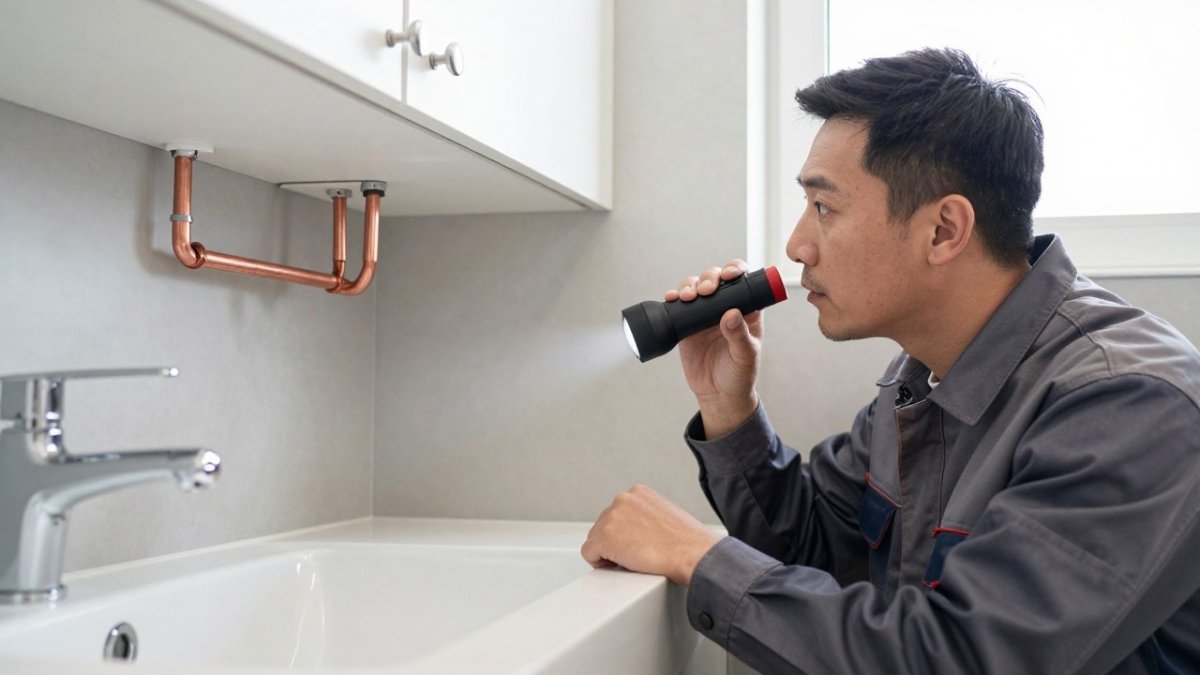
Rough-in inspection: what the inspector needs to see
The rough-in happens after supply, drain, waste, and vent piping is installed and before walls, floors, or ceilings are closed.
- Supply lines are run, supported, and protected where they pass through framing
- Drain and waste lines show the required slope toward the main line
- Vent pipes are connected, properly sized, and not blocked or terminated in the wrong location
- Pipe penetrations through framing are protected against abrasion where required
- The system has been tested, often with a water test or air test, and the test is still in place when the inspector arrives
Walls and floors generally need to stay open until the rough-in passes.
Watch out: if the inspector finds a slope, vent, or support problem at rough-in, the correction usually means opening the work back up.
Final inspection: what the inspector checks after fixtures are set
The final inspection happens after fixtures are installed, connections are made, and the system is operational. The inspector is confirming that the finished work matches the approved scope and that the system works without leaks.
- Toilets, sinks, showers, and tubs are set and connected
- Supply connections are tight with no visible leaks under normal pressure
- Drain connections flow freely and traps are properly installed
- Venting is complete and terminates correctly at the roof or exterior
- Access panels are installed where the code requires access to concealed connections
- The work matches the approved plans, including any changes approved during the project
How to prepare for the inspection visit
Preparation is mostly about access and documentation. Clear the work area so the inspector can reach the piping and fixtures, have the approved plans and permit card on hand, and make sure anyone who needs to answer questions about the work is reachable. If the project changed after plan review, a fixture moved, a line rerouted, tell the department before the inspection rather than after, because unapproved changes can fail the inspection even when the work itself is sound.
If an inspection fails
A failed inspection is a correction notice, not a dead end. The inspector typically lists the specific items that did not pass, and you or your contractor correct them and request a re-inspection, which may carry a separate re-inspection fee. Ask the department how re-inspections are scheduled and whether the fee applies per visit. Keeping the correction list and the re-inspection record with the permit documents protects you if questions come up later at resale or with an insurer.
Why the inspection record matters beyond the project
A passed final inspection is the document that shows the plumbing work was reviewed against the code in effect at the time. An open or missing permit can complicate a sale or an insurance claim, so keep your permit records. If you are unsure whether prior work was permitted, ask the building department how to bring existing work into compliance before you start new work on top of it.
Booking Your Bathroom Project With B&G Home Improvement Inc.
If your bathroom plumbing work needs a permit, the process can feel overwhelming. Review our professional bathroom renovation services in Durham before you reach out.
Our approach emphasizes clear communication and careful planning, and our team is committed to lasting quality. Call the Expert Renovation Contractors Now to discuss your bathroom project and get a consultation.
Frequently Asked Questions
Do I need a permit to change plumbing in a bathroom?
Often, yes. Moving a drain, adding a new supply line, or relocating a toilet, shower, or tub usually requires a permit from your local building department. Like-for-like repairs, such as replacing a worn washer or a leaking supply valve, typically do not. Because rules are set by the city or county and sometimes by state code, call your local building department before you start to confirm what applies to your project.
Can I do bathroom plumbing work myself without a permit?
Many jurisdictions allow homeowners to perform work on their own primary residence, but they still require a permit for alterations, and the work must pass inspection. Some areas restrict certain trades, such as gas or main sewer connections, to licensed professionals. Check whether your local office permits owner-performed work and what inspections you must schedule.
What can happen if I remodel a bathroom without the required permit?
Unpermitted work can lead to stop-work orders, fines, and a requirement to open finished walls so inspectors can verify the plumbing. It can also complicate a home sale, since buyers and lenders may ask for proof that work was approved. Pulling the permit after the fact is often possible but usually costs more than doing it correctly the first time.
Who applies for a plumbing permit: the homeowner or the contractor?
Either can, depending on your jurisdiction and who is doing the work. Licensed contractors commonly pull permits in their own name, while homeowners may apply for owner-builder permits on their own homes. Confirm with the building department which applicant type is accepted and what documents, such as a site plan or fixture list, you need to submit.
