
Table of Contents
- Can You Relocate a Bathroom Toilet? What Decides Yes or No
- How Far Can You Move a Toilet? Moving a Toilet a Few Feet vs Across the Room
- How to Move a Toilet Drain Pipe: Slope, Diameter, and the Soil Stack
- Moving a Toilet in a Second-Floor Bathroom: Joists, Subfloor, and Waterproofing
- Cost to Relocate a Toilet: What Drives the Price
- Permits, Code Checks, and When to Call a Licensed Plumber
- When Relocating the Toilet Is Not Worth It: Alternatives to Try First
- Frequently Asked Questions
Last Updated: October 12, 2026
Can You Relocate a Bathroom Toilet? What Decides Yes or No
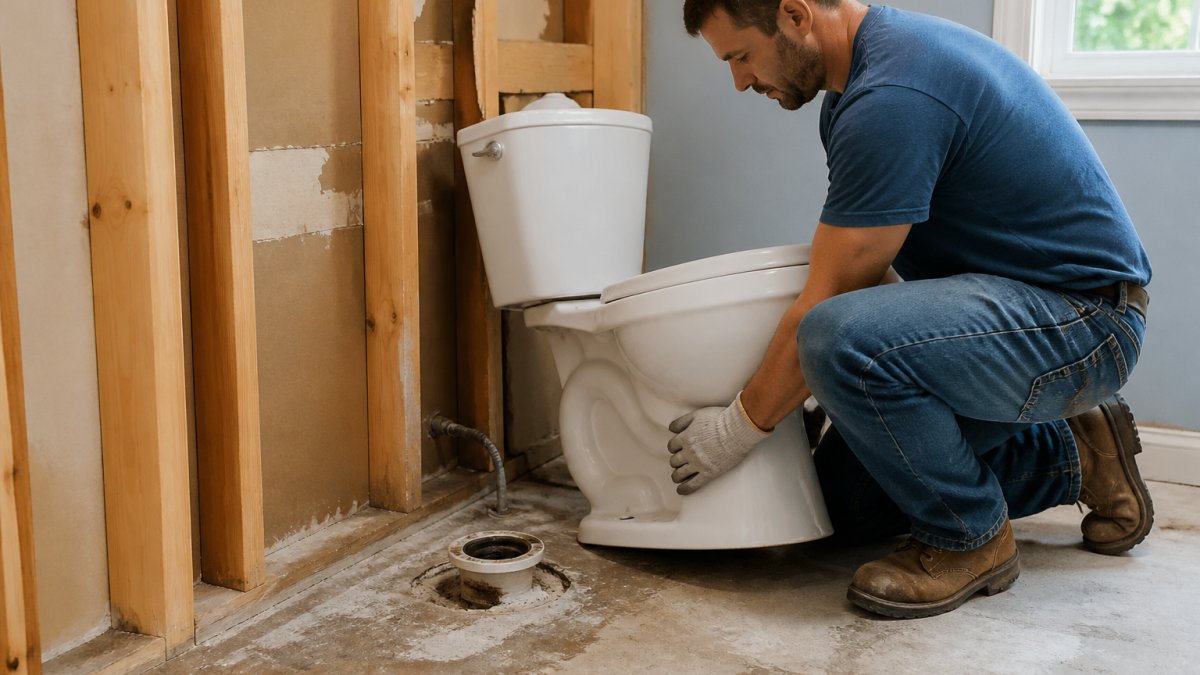
So, can you relocate a bathroom toilet in most homes? At B&G Home Improvement Inc., we have experience with bathroom remodels, and the answer comes down to what is under the floor.
The toilet itself is easy, the drain pipe, slope, and vent decide if the project works. These four constraints apply to every move, from a few inches to across the room.
The Four Constraints That Govern Every Toilet Move
- Drain slope. A drain pipe needs a minimum fall of about 1/4 inch per foot. Too little slope and waste sits in the pipe.
- Pipe diameter. A toilet drain needs a 3-inch pipe in most cases. Smaller pipes clog.
- Distance to the stack. The farther the toilet sits from the main soil stack, the more pipe and slope you need.
Check these four before picking a new location. If all four pass, the move is usually possible.
How Far Can You Move a Toilet? Moving a Toilet a Few Feet vs Across the Room
Moving a toilet a few feet is common and often simple; moving it across the room may need new framing and a longer drain run. Distance matters because of slope: a 10-foot drain needs about 2.5 inches of fall, a 3-foot drain less than an inch.
- A few inches to 2 feet: Often the easiest. An offset toilet flange can sometimes handle small shifts.
- 2 to 6 feet: Usually workable if the floor is open and the stack is nearby.
- Across the room: Possible, but expect new drain pipe, more slope, and a longer vent run.
Distance Limits by Floor Type
The floor under the bathroom sets the real limit. A crawlspace or basement gives you room to run pipe. A concrete slab does not.
| Floor Type | Access to Pipes | Typical Difficulty | Best For |
|---|---|---|---|
| Crawlspace | Easy from below | Moderate | Most moves a few feet |
| Basement below | Easy from below | Moderate | Moves with room to slope pipe |
| Second floor | Open ceiling below | Harder | Short moves near the stack |
| Concrete slab | None without cutting | Hardest | Small shifts only |
On a slab, cutting the concrete is the only way to move the drain far, which adds cost and mess.
How to Move a Toilet Drain Pipe: Slope, Diameter, and the Soil Stack
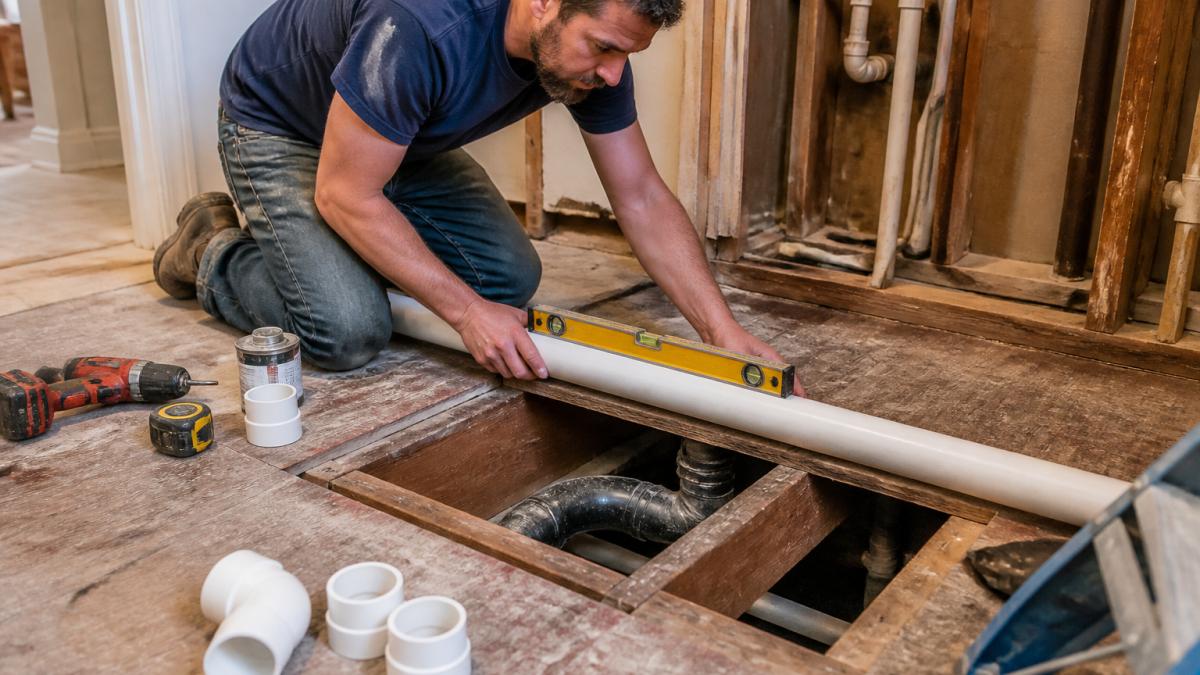
Moving a toilet drain pipe means running a new drain from the new spot to the main soil stack, holding a steady downhill slope, and tying in a vent.
The Numbers That Govern the Drain
These are the figures most U.S. plumbing codes converge on, verify them with your local building department before cutting:
- Pipe size. A toilet needs a 3-inch drain; a 2-inch line is too small and will clog. Some codes allow 2 inches only for a toilet that also receives a lavatory drain downstream.
- Slope. Horizontal drain pipe runs at 1/4 inch of fall per foot for pipe 2-1/2 inches and smaller. For a 3-inch line, most codes allow 1/4 or 1/8 inch per foot, but 1/4 inch is safer and keeps solids moving.
- Slope math. A 10-foot run at 1/4 inch per foot needs 2.5 inches of total fall; a 4-foot run needs 1 inch; a 3-foot run needs 3/4 inch. That fall has to fit inside the floor cavity or below the joists.
The Steps We Follow on a Job
- Shut off the water supply and drain the tank and bowl.
- Pull the old toilet and set it aside; cap or plug the old drain opening.
- Open the floor to expose the existing drain, the branch line, and the main soil stack.
- Mark the new drain path with a level and a consistent downhill slope, check the fall over the whole run, not just at one end.
- Cut and dry-fit the new 3-inch drain pipe and fittings before gluing anything.
- Connect the new drain to the main soil stack with the correct fitting for the direction of flow.
- Tie in the vent connection within the distance your local code allows.
- Set the new toilet flange so its top sits flush with, or slightly above, the finished floor.
- Test the drain, fill and flush, then watch for gurgling, slow drainage, or leaks at every joint.
- Close the floor and finish the surface only after the drain passes.
The soil stack is the big vertical pipe that carries waste down and out. Your new drain has to tie into it. If the stack is far away, the run gets longer and the slope gets harder to hold inside the floor cavity.
Venting and Rough-In After the Drain Moves
A toilet needs a vent pipe within a set distance of the drain, or the trap can siphon and the toilet gurgles. The exact distance depends on local plumbing code, confirm it with your building department.
Rough-in is the measurement from the finished back wall to the center of the drain. Standard rough-in is about 12 inches, with a common range of 10 to 14 inches.
Check current drain, slope, and vent requirements with your local building department
Moving a Toilet in a Second-Floor Bathroom: Joists, Subfloor, and Waterproofing
A second-floor bathroom adds two problems: floor joists and water. The drain has to run between or through the joists, and any leak can damage the ceiling below.
Floor joists are the framing beams under the subfloor. A 3-inch drain needs a clear path, and cutting a joist can weaken the floor.
Moving a toilet on a second floor also means new waterproofing.
Call the Expert Renovation Contractors Now →
Watch these three things on an upper floor:
- Joist direction. Running pipe along the joists is easier than cutting across them.
- Subfloor repair. Patch the opening so the new tile has a solid base.
- Waterproofing. Seal around the new flange so water cannot reach the ceiling below.
Get this wrong and you trade a toilet problem for a ceiling problem.
Cost to Relocate a Toilet: What Drives the Price
The cost to relocate a toilet depends on how far it moves, what floor it sits on, and how hard the pipes are to reach. There is no single price, but you can build a realistic budget by pricing the parts separately.
What Actually Drives the Number
- Distance. A longer drain run means more pipe, more slope, and more labor. A 2-foot shift and a 12-foot shift are not the same job.
- Floor type. A concrete slab costs more than a crawlspace because the concrete has to be saw-cut, the trench dug, and the slab patched. A framed floor with a basement or crawlspace below is the cheapest access.
- Access. If the pipes are easy to reach from below, the job is faster and cheaper. If the ceiling below has to be opened and repaired, add that to the total.
- Finish work. New tile, flooring, paint, and drywall repair add to the total, and are often the largest single line on a small move.
A Rough Budget Framework
| Line Item | Small Shift (offset flange, no drain move) | Moderate Move (a few feet, open access) | Long Move (across the room or slab) |
|---|---|---|---|
| Drain pipe and fittings | Minimal | Moderate | High |
| Labor (plumber) | Low | Moderate | High |
| Floor opening and repair | None to low | Moderate | High |
| Slab cutting and patching | N/A | N/A | High |
| Vent rerouting | None | Low to moderate | Moderate to high |
| Tile, flooring, paint | None to low | Moderate | Moderate to high |
| Permit and inspection | Often not required | Usually required | Usually required |
A small shift with an offset flange is typically cheapest because the drain does not move. A move across the room on a slab is typically most expensive because it combines drain, concrete, and finish work.
How to Compare Bids Fairly
Because pricing depends on your layout and access, we give every homeowner a clear quote after we inspect the space. Call B&G Home Improvement Inc. for a quote based on your actual bathroom.
Permits, Code Checks, and When to Call a Licensed Plumber
Most toilet relocations need a building permit and a licensed plumber. Moving a drain changes the plumbing system, and that work falls under local plumbing code.
Rules vary by town and state, slope, pipe size, vent distance, and permit rules are set locally.
When should you call a pro?
- Any move that changes the drain location
- Any work on a concrete slab
- Any second-floor move near the joists
- Any time the vent has to be rerouted
A small shift with an offset flange might be a weekend job. A move across the room is not.
When Relocating the Toilet Is Not Worth It: Alternatives to Try First
Sometimes the smart move is not to move the toilet at all. If the drain, slope, or floor makes relocation too costly, try these first:
- Offset toilet flange. Shifts the toilet a few inches without moving the drain.
- A different toilet shape. A round-front bowl takes less space than an elongated one.
- Rear-outlet toilet. Some models discharge out the back instead of the floor.
- Rearrange the rest of the room. Move the vanity or shower instead of the toilet.
A bathroom remodel is about how the whole room works. If the toilet is fine where it is, spend the money on the layout that bothers you most rather than tearing up the floor for one fixture.
Relocating a toilet is a plumbing project, not a decorating one. The drain, slope, and vent decide what is possible, and cutting corners there leads to clogs and leaks later.
Frequently Asked Questions
How much does it cost to relocate a toilet in a bathroom?
There is no single number, because the cost to relocate a toilet depends on how far the toilet moves, whether the floor is a slab or framed, and how easily the plumber can reach the existing drain and vent. Moving a toilet a few feet on a framed floor with open access costs far less than cutting a concrete slab. B&G Home Improvement Inc. can walk through your bathroom layout and give you a written estimate before any work starts.
How far can you move a toilet from its original location?
On a framed floor with a crawlspace or basement below, a toilet can often move several feet as long as the new drain line keeps the required slope and ties back into the soil stack. On a slab foundation, distance is limited by how much concrete you are willing to cut. An offset toilet flange can shift the fixture a few inches without moving the drain at all, which is the cheapest option when the goal is simply a small shift.
Can a toilet be moved in a second-floor bathroom?
Yes, and second-floor moves are often easier than slab work because the pipes run through open joist bays. The catch is structural: cutting joists to route a new drain weakens the floor unless the framing is reinforced. You also need to protect the ceiling below from leaks, so waterproofing and a careful drain test matter more upstairs. A licensed plumber should confirm joist direction and vent distance before demolition begins.
Do you need a permit to relocate a toilet?
In most jurisdictions, moving a toilet changes the drain, waste, and vent system, which requires a plumbing permit and an inspection. Permits protect you at resale, because unpermitted plumbing work often surfaces during a buyer's inspection. Requirements vary by county and city, so confirm with your local building department before work begins. A licensed plumber or remodeling contractor typically handles the permit application as part of the project.
Comments