
Last Updated: November 7, 2026
Quick Summary
Affordable small kitchen cabinet upgrades are worth it because cabinet boxes are often still sound, and swapping doors, hardware, and finish changes the whole room for far less than replacement. Painting and hardware deliver the biggest visual change for the least money and effort.
- Swap knobs and pulls first: the cheapest upgrade, often fitting existing screw holes.
- Prep painted doors in order: label, degrease, sand, prime, then two thin coats.
- Keep the counter as clear as possible and let the cabinets do the storing.
- Price a borrowed or rented miter saw before committing to a trim project.
- Skip paint and trim in a rental unless your lease allows it in writing.
Table of Contents
- Updating a Kitchen Without Replacing Cabinets: What Actually Works
- How to Redo Kitchen Cabinets on a Budget: 7 Projects Ranked by Difficulty
- Small Kitchen Storage Upgrades That Free Up Counter Space
- Kitchen Upgrade Cost: What Each Project Really Runs
- Durability and Maintenance: How Long Each Upgrade Lasts
- Rental-Friendly and Reversible Cabinet Upgrades
- Suitability Checks Before You Start Any Cabinet Project
- Planning Your Small Kitchen Cabinet Project with B&G
- Frequently Asked Questions
Updating a Kitchen Without Replacing Cabinets: What Actually Works
Affordable small kitchen cabinet upgrades are the fastest way to change how a kitchen looks without tearing it apart. Cabinet boxes are often still sound. It's usually the doors, hardware, and finish that age.
Cabinet upgrades matter most in small kitchens. Every surface sits close to the eye, so a fresh color or new pulls read as a full remodel. The U.S. Department of Energy guide to kitchen design notes that layout and storage drive how well a small kitchen works, not square footage alone.
Below, we rank seven projects by difficulty, with honest notes on cost, durability, and what's reversible.
How to Redo Kitchen Cabinets on a Budget: 7 Projects Ranked by Difficulty
Paint and hardware often deliver the biggest visual change for the least money and effort. Trim, inserts, and lighting usually cost more and take longer.
The seven projects, easiest first:
- Swap knobs and pulls
- Paint doors and frames
- Add trim or molding to flat doors
- Install glass or other inserts
- Remove doors for open shelving
- Add under-cabinet or in-cabinet lighting
- Refinish or resurface the existing faces
Painting Cabinet Doors and Frames
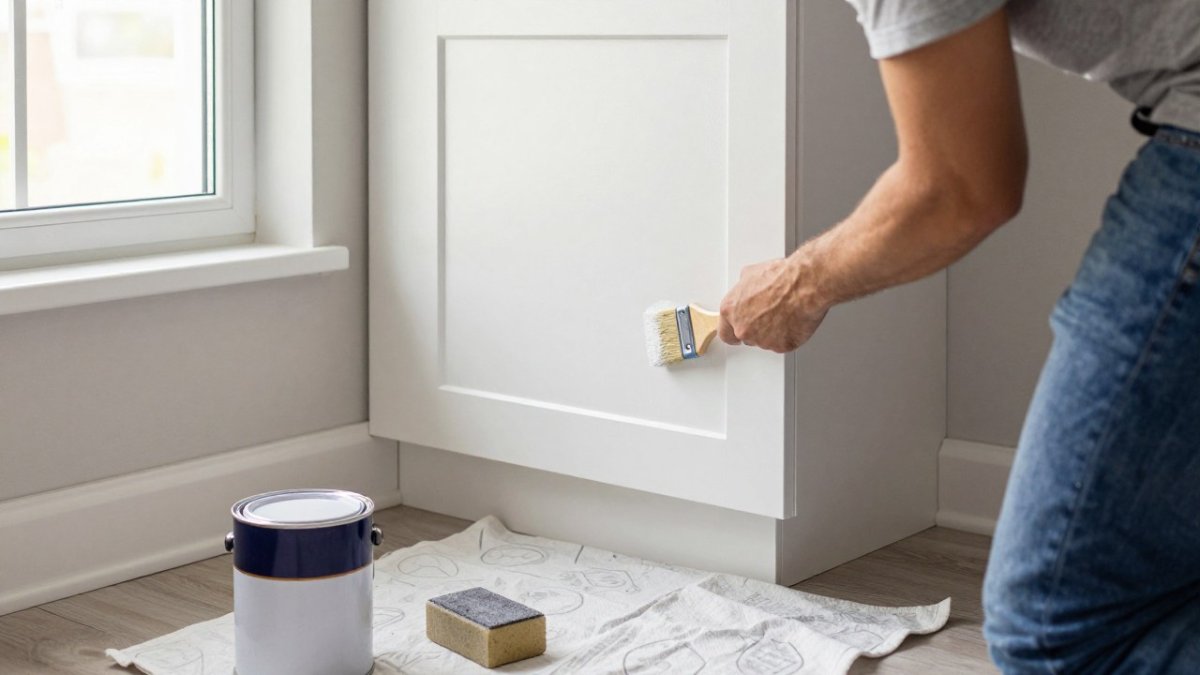
Painting is often among the highest-impact, lowest-cost cabinet upgrades. A common mistake is skipping the degreasing step. Kitchen grease hides in corners, and paint will peel there first.
Prep in this order:
- Remove doors and drawers, then label them
- Degrease every surface
- Sand lightly to dull the sheen
- Prime with a bonding primer
- Paint two thin coats, not one thick one
Watch out: painting over glossy factory finish without sanding leads to chipping within months. If painting sounds like too much work, you can hire cabinet refinishing in Chapel Hill instead. Choosing a color? See our guide to the 5 best kitchen cabinet colors for small spaces.
Swapping Knobs and Pulls
Hardware is the cheapest swap on this list, and it changes the whole feel of a kitchen. Many cabinets use standard screw spacing, so new pulls often fit existing holes.
Check two things before buying:
- Center-to-center screw distance on existing holes
- Whether you want a new hole pattern, which means drilling
Keep the old hardware in a bag. It makes the upgrade reversible for renters.
Adding Trim and Molding to Flat Doors
Flat, builder-grade doors look plain. A thin trim frame glued and nailed to the door face creates a shaker look for very little material cost.
This project needs a miter saw or a steady hand with a miter box. Measure twice, cut once, and test-fit before gluing. Paint covers the seams.
Small Kitchen Storage Upgrades That Free Up Counter Space
In a small kitchen, storage and appearance are closely linked. Clutter on the counter makes the room read as smaller, and every cabinet you open is within arm's reach, so a disorganized shelf is visible every day.
Start with the changes that need no tools:
- Shelf risers. A wire or acrylic riser doubles the usable height of a shelf by letting you stack plates or cans in two tiers. Measure the interior height first; most cabinets give you 10 to 12 inches, which fits one riser and one layer of dinnerware.
- Tension rods and hanging rails. A tension rod under the sink holds spray bottles upright; a rail under an upper cabinet holds utensils and frees drawer space. Both remove cleanly, which matters in a rental.
- Lazy Susan or turntable. In a corner base cabinet, a turntable brings the back of the shelf to the front. This is the single best fix for the deep corner that swallows pots.
Then the changes that need a drill and about an hour:
- Pull-out shelf in a base cabinet. A single sliding shelf on side-mount slides turns a deep, dark base cabinet into one you can reach without kneeling. Measure the interior width and depth, buy slides rated for the load, and mount the shelf to the cabinet floor or side walls. This is the highest-function upgrade on the list for anyone with back or knee issues.
- Door-mounted racks. A rack on the inside of a cabinet door holds lids, cutting boards, or foil and wrap. Check that the door hinges can take the extra weight before loading it.
- Undershelf baskets. Slide-in baskets under a shelf corral small items and keep the shelf above usable.
Watch out: pull-out shelves and door racks add weight to cabinet boxes that may already be sagging. If the cabinet floor flexes when you press on it, fix or reinforce the box before adding a loaded pull-out.
For small kitchens specifically, one visual rule beats any product: keep the counter as clear as possible and let the cabinets do the storing. A counter with two appliances and a clear stretch of workspace reads larger than the same counter crowded with canisters and a knife block.
Renters can use every no-tool item above plus freestanding risers and tension rods, and take them along when they move. Skip anything that screws into the cabinet unless the lease allows it in writing.
For layout ideas that squeeze more storage from tight footprints, read our guide to custom kitchen layouts for small spaces.
Kitchen Upgrade Cost: What Each Project Really Runs
Most guides give you a vague "budget-friendly" label and move on. For a small kitchen, the useful number is the all-in cost of one project, materials plus any tool you don't already own, because a compact kitchen usually means fewer doors, which pulls every project into a lower tier than the same upgrade in a large kitchen.
Pricing depends on cabinet count, door style, and finish choice. For current pricing or a quote, visit the B&G Home Improvement Inc. website.
| Project | Typical material cost (small kitchen) | Tools you may need to buy | DIY time |
|---|---|---|---|
| Knobs and pulls | $40-$150 for 15-20 pieces | Screwdriver; drill only if changing hole spacing | Under an hour |
| Paint (doors and frames) | $80-$200 for primer, paint, sanding supplies, tape | Brushes, rollers, sanding block | A weekend |
| Trim on flat doors | $60-$180 for trim stock, adhesive, nails, paint | Miter saw or miter box | 1-2 days |
| Glass or insert panels | $150-$500 depending on panel type and door count | None if pro-installed | Pro install, 1 day |
| Open shelving (door removal) | $50-$200 for brackets, shelves, paint for interiors | Drill, level | Half a day |
| Under-cabinet lighting | $60-$250 for LED strip or puck lights, wiring, connectors | Drill, wire strippers | 1 day |
| Refinishing or resurfacing | $200-$600 for veneer, adhesive, finish | Router or trim tools if resurfacing | Several days |
Watch out: the tool line is where DIY budgets blow up. A miter saw you buy for one trim project can cost more than the trim itself, so price a borrowed or rented saw before committing.
Labor is the other half of the number. If you hire out painting or refinishing, get the quote in writing with the cabinet count spelled out. For a fuller picture of how cabinet work fits into a whole-kitchen number, see our guide to kitchen remodel budget planning. We quote every project after a walkthrough, since pricing depends on cabinet count and condition.
Typical material cost of small kitchen cabinet upgrade projects
Durability and Maintenance: How Long Each Upgrade Lasts
Paint lasts longest when prep is done right. Expect a factory-style finish to hold up for years, while a rushed job peels early. Hardware lasts indefinitely but finishes wear with heavy use.
Maintenance is simple:
- Wipe painted doors with a damp cloth, not abrasives
- Tighten pull screws twice a year
- Re-caulk trim if it lifts near the sink
Refinished surfaces hold up well in dry areas but suffer near steam and water. The EPA's indoor air quality guidance is worth a read before choosing finishes, especially in small kitchens with little ventilation.
Rental-Friendly and Reversible Cabinet Upgrades
Renters can still upgrade cabinets, as long as every change reverses cleanly. The rule: nothing permanent, nothing drilled that can't be patched.
Safe renter moves:
- Swap knobs and pulls, keep the originals
- Add peel-and-stick backsplash behind the counter
- Use tension rods and hanging rails
- Add freestanding shelf risers inside cabinets
Skip paint and trim in a rental unless your lease allows it in writing.
Suitability Checks Before You Start Any Cabinet Project
Not every cabinet is a good candidate for a cosmetic upgrade. Check these before you buy supplies.
- Box condition: soft, swollen, or crumbling particleboard means replace, not refinish
- Door material: solid wood and MDF take paint well; some thermofoil does not
- Moisture damage: stains or swelling near the sink need repair first
- Hinge wear: loose hinges make new doors hang crooked
- Lead paint: homes built before 1978 may have lead paint, so test before sanding. The EPA's lead-safe renovation rules explain what to check.
If two or more boxes fail these checks, put the money toward replacement instead.
Planning Your Small Kitchen Cabinet Project with B&G
The best plan matches the project to your budget, your skill, and how long you can live without a working kitchen. That's the part most guides skip.
We start with an in-depth consultation: we look at your cabinet boxes, talk through your taste and budget, and recommend upgrades designed to last. Our team is locally owned and staffed, so you can reach a real person after the project.
If you're ready to move from planning to hiring, learn about our kitchen remodeling in Carrboro. We serve homeowners across the Triangle and finish projects within the agreed time frame.
Small kitchen cabinet upgrades are worth it when the boxes are sound and the plan fits your budget. Painting, hardware, and trim deliver the biggest change for the least money. Lighting and inserts add function where space is tight. Get the prep right, and these upgrades will hold up for years.
Ready to refresh your kitchen without a full remodel? Get started with B&G Home Improvement Inc. and turn your existing cabinets into a kitchen you're proud to show off.
Frequently Asked Questions
How can I update kitchen cabinets without replacing them?
Painting the doors and frames, swapping hardware, adding decorative trim to flat doors, installing glass inserts, and adding under-cabinet lighting all refresh existing cabinets without a full replacement. These cabinet upgrades work on builder-grade boxes because the structure stays in place and only the visible surfaces change. Start with a thorough cleaning and a suitability check on the door material, then pick projects that match your budget and skill level.
Is it cheaper to paint or replace kitchen cabinets?
Painting costs far less than replacement because you keep the existing cabinet frames and doors. Replacement involves new boxes, doors, installation labor, and often countertop and backsplash adjustments. Painting also finishes faster, usually over a weekend or two for a small kitchen. The trade-off is durability: a painted finish on high-use doors may need touch-ups sooner than factory-finished replacements, so weigh the savings against how long you plan to stay.
What cabinet upgrades work best in a small kitchen?
In a small kitchen, focus on upgrades that add storage or reduce visual clutter. Small kitchen storage upgrades like pull-out shelves, door-mounted racks, and stackable inserts free up counter space. Light colors on cabinet paint and two-tone finishes make the room feel larger. Under-cabinet lighting brightens work zones without adding bulk. Reversible options such as removable wallpaper inserts or tension rods let renters make changes without permanent alterations.
How much does it cost to update kitchen cabinets?
Kitchen upgrade cost varies widely by project. Hardware swaps are typically the least expensive option, while paint, trim, glass inserts, and lighting add cost depending on materials and whether you hire help. For pricing on your specific cabinets, visit the B&G Home Improvement Inc. website for a quote.
