
Table of Contents
- Walk-In Shower Pros and Cons
- Tub to Shower Conversion Cost: What You'll Actually Pay
- Impact on Home Resale Value
- Accessibility and Aging-in-Place Benefits
- Porcelain vs. Ceramic Tile for Bathrooms
- Maintenance, Cleaning, and Long-Term Care
- Is the Conversion Right for Your Home?
- Frequently Asked Questions
Last Updated: September 20, 2026
Walk-In Shower Pros and Cons
A walk-in shower conversion transforms your bathroom by removing the tub and replacing it with an open, accessible shower space. Whether this renovation makes sense depends entirely on your lifestyle, home value goals, and long-term plans. The decision isn't straightforward, there are real advantages and genuine drawbacks worth weighing carefully.
The Real Advantages
Walk-in showers offer tangible benefits that appeal to many homeowners. The primary advantage is accessibility. Eliminating the tub edge creates a seamless entry that works for aging parents, children, and anyone with mobility challenges. This universal design approach makes bathing safer and more comfortable for the entire household.
Space perception improves dramatically. Even in small bathrooms, a walk-in shower feels more open than a tub-and-shower combo. The minimalist aesthetic appeals to modern design preferences and can make your bathroom feel larger than it actually is.
Cleaning becomes simpler. Tubs trap soap scum, mold, and hard-to-reach corners. A shower-only setup reduces maintenance time significantly. Non-slip flooring and proper drainage eliminate most problem areas.
Daily convenience matters too. Most people shower rather than bathe. A dedicated walk-in shower simplifies your morning routine and works better for households where bathing isn't a priority.
The Drawbacks You Should Know
The biggest drawback is loss of bathing functionality. If anyone in your household enjoys soaking, this conversion eliminates that option permanently. Young children, relaxation seekers, and anyone with specific bathing needs lose a valuable amenity.
Resale impact cuts both ways. While accessibility appeals to aging buyers, families with young children may view the missing tub as a dealbreaker. Your local market determines whether this helps or hurts your home's appeal.
Installation complexity often exceeds expectations. Removing a tub isn't simple demolition, it involves plumbing relocation, subfloor assessment, waterproofing, and potential structural adjustments. Hidden costs emerge frequently during this phase.
Moisture control becomes critical. Shower-only bathrooms generate significant steam and water spray. Without proper ventilation and waterproofing, you risk mold growth and water damage to adjacent walls and flooring.
Tub to Shower Conversion Cost: What You'll Actually Pay
A walk-in shower conversion involves more than just removing a tub and installing a shower. The actual expenses depend on your bathroom's current condition, local labor rates, and material choices.
The conversion process typically includes demolition, plumbing work, subfloor preparation, waterproofing, tile installation, and fixture selection. Each component carries its own cost implications.
Hidden Costs Contractors Don't Always Mention Upfront
Subfloor damage is the most common surprise. Once contractors remove the tub, they often discover rotted wood, water damage, or structural issues beneath. Replacing compromised subfloor sections adds significant expense and extends your timeline.
Plumbing relocation frequently exceeds initial estimates. If your new shower location differs from the old tub placement, drain lines and supply pipes need repositioning. This work requires licensed plumbers and can involve cutting into walls or floors.
Waterproofing requirements are more extensive than many expect. Modern building codes require proper waterproofing membranes, sealed grout, and moisture barriers. Cutting corners here invites future mold and water damage that costs far more to remediate.
Tile work and custom features add up quickly. Premium tile selections, intricate patterns, frameless glass enclosures, and luxury fixtures increase costs substantially. What seems like a modest upgrade during design phase can impact your final bill significantly.
Structural reinforcement sometimes becomes necessary. If your bathroom has inadequate support for a large shower pan or if you're adding heavy stone elements, framing adjustments may be required.
Impact on Home Resale Value
The resale value impact of a walk-in shower conversion depends heavily on your local market and buyer demographics. In some regions, removing the tub increases home value. In others, it creates a liability.
Markets with aging populations and accessibility-focused buyers view walk-in showers favorably. These conversions signal universal design and low-maintenance living, qualities that appeal to empty nesters and retirees.
Family-oriented markets often penalize homes without tubs. Young families need bathing options for children. A missing tub can be a dealbreaker for this demographic, potentially reducing your home's appeal and market value.
The conversion's quality matters enormously for resale. A professionally installed walk-in shower with high-end finishes, proper waterproofing, and thoughtful design adds value. A poorly executed conversion with visible moisture problems or cheap materials detracts from it.
Call the Expert Renovation Contractors Now →
Documentation strengthens your position. Keep detailed records of all work completed, permits obtained, and materials used. This proof of quality workmanship reassures future buyers and supports your asking price.
Accessibility and Aging-in-Place Benefits
Walk-in shower conversions are among the most effective aging-in-place modifications available. They address real safety concerns while maintaining dignity and independence for older adults.
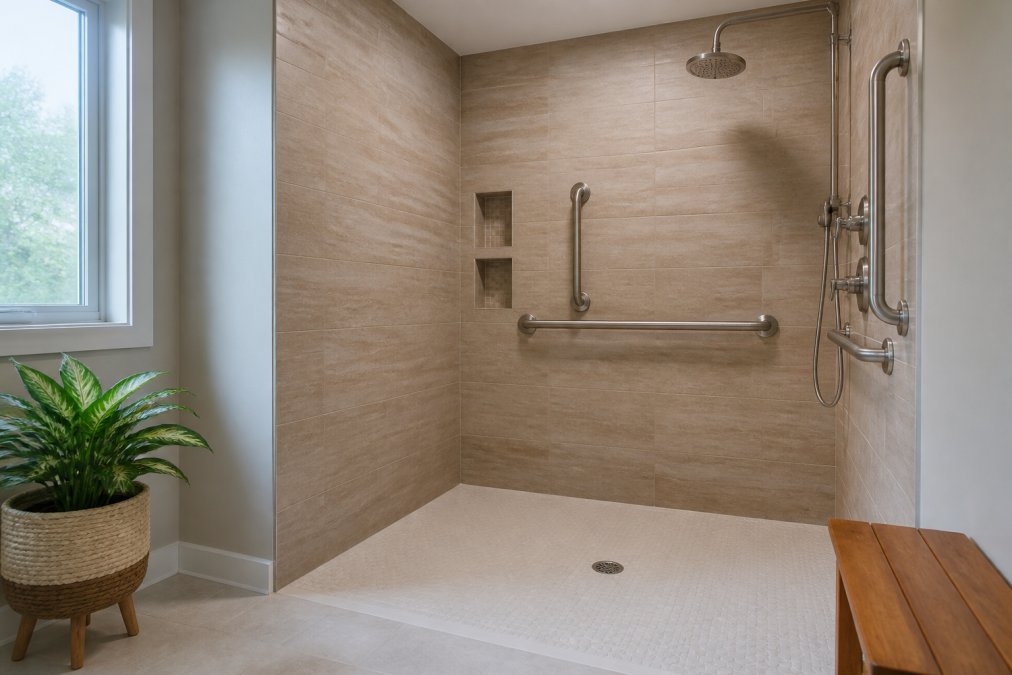
A curbless entry eliminates tripping hazards and allows wheelchair access. Grab bars provide stability for balance and support during showering. Non-slip flooring reduces fall risk significantly, a critical concern for older adults.
The psychological benefit shouldn't be overlooked. Accessible design preserves independence and reduces the shame or frustration some older adults feel when bathing becomes difficult. A well-designed walk-in shower lets people maintain their routines without assistance.
Universal design principles make these showers useful for the entire household, not just aging residents. Children, people with temporary injuries, and anyone with mobility challenges benefit from the accessible features.
Porcelain vs. Ceramic Tile for Bathrooms
Choosing between porcelain and ceramic tile significantly impacts your shower's durability, maintenance requirements, and long-term costs. Both materials work in bathrooms, but they perform differently.
Porcelain tile is denser and less porous than ceramic. This density makes it more water-resistant, more durable, and longer-lasting in wet environments. Porcelain resists staining better and requires less maintenance over time.
Ceramic tile is more affordable upfront and offers excellent aesthetic variety. It's adequate for bathroom use when properly installed and sealed. However, it's softer and more prone to chipping, and its higher porosity means it absorbs more moisture.
For shower walls and floors, porcelain generally outperforms ceramic due to its superior water resistance and durability. The higher initial cost pays dividends through reduced maintenance and longer lifespan.
Grout maintenance applies to both materials. Proper sealing of grout lines is essential regardless of tile type. Unsealed grout invites mold growth and water infiltration, potentially causing expensive damage.
Maintenance, Cleaning, and Long-Term Care
A walk-in shower requires different maintenance than a traditional tub, and the specific demands depend heavily on your enclosure choice. Understanding these requirements helps you decide if you're willing to commit to ongoing care.
Regular cleaning prevents mold and mildew buildup. Shower surfaces need weekly cleaning with appropriate bathroom cleaners. Proper ventilation is critical, run your exhaust fan during and for at least 20 minutes after showers to remove moisture that feeds mold growth. Homes in humid climates or bathrooms without adequate ventilation may require daily fan use. If your bathroom lacks an exhaust fan, installing one before the conversion is essential; retrofit installation costs $300-$600 but prevents mold damage that costs thousands to remediate.
Grout and caulk need periodic attention and are the most vulnerable points in your shower's waterproofing. Inspect these seals annually for cracks, discoloration, or gaps. Damaged grout allows water to penetrate behind tile, causing hidden mold growth and structural damage. Most contractors recommend resealing grout every 3-5 years, a task that costs $200-$400 when done professionally. Caulk at corners and edges typically needs replacement every 2-3 years. Neglecting this maintenance is the primary cause of water damage in shower installations.
Glass enclosures, if you choose them, introduce a significant maintenance burden that many homeowners underestimate. Frameless glass looks modern and clean but requires discipline to maintain that appearance. Hard water deposits (mineral buildup from tap water) accumulate on glass surfaces and create a cloudy, spotted appearance within weeks in areas with moderate-to-hard water. Squeegee use immediately after every shower extends the time between deep cleanings but requires consistent habit formation, many households struggle with this discipline. Without squeegee use, you'll need to deep-clean glass weekly with vinegar solutions or commercial glass cleaners to prevent mineral buildup.
Is the Conversion Right for Your Home?
Deciding whether a walk-in shower conversion makes sense requires honest assessment of your household's needs and your home's market position.
Frequently Asked Questions
What are the main downsides of a walk-in shower conversion?
Walk-in showers eliminate your bathtub, which matters if you enjoy soaking or have young children. They require more frequent cleaning due to exposed surfaces and grout maintenance. Glass enclosures can develop hard water stains and mineral buildup. The initial plumbing relocation and waterproofing add significant upfront costs, and some homebuyers still prefer having a tub available. Space efficiency can also be a concern in smaller bathrooms, where a walk-in shower may feel cramped without proper planning.
How much does a tub-to-shower conversion typically cost?
Costs vary widely based on complexity, materials, and local labor rates. Basic conversions with standard tile and fixtures start lower, while premium finishes, custom tiling, plumbing relocation, and structural work (subfloor repair, waterproofing) drive costs higher. Hidden expenses often include addressing water damage in the subfloor, upgrading drainage systems, and dealing with unexpected structural issues once the old tub is removed. For an accurate quote tailored to your specific bathroom layout and vision, contact B&G Home Improvement Inc. for a detailed consultation.
Does removing a bathtub hurt home resale value?
Not necessarily. Modern walk-in showers with universal design features, grab bars, curbless entry, non-slip flooring, appeal to aging-in-place buyers and younger homeowners who value accessibility and minimalist aesthetics. However, removing your only tub can be a drawback if you have young children or if the market in your area still strongly prefers traditional tub-shower combos. The return on investment depends on your home's style, local buyer preferences, and the quality of the conversion. A well-executed walk-in shower renovation can actually boost home equity when it aligns with current bathroom renovation trends.
How long does a tub-to-shower conversion typically take?
The timeline for a tub-to-shower conversion depends on the scope of work, including factors like plumbing relocation, subfloor repair, or extensive waterproofing. Unexpected issues discovered during demolition, such as water damage, mold, or structural problems, can also impact the project duration. B&G Home Improvement Inc. provides clear communication regarding project timelines and keeps you informed if complications arise.
Comments