
Last Updated: November 2, 2026
Quick Summary
An energy efficient roof reduces heat transfer between your home and the outdoors using reflective surfaces, insulation, and controlled ventilation, which lowers summer heat gain and winter heat loss. The main benefits are lower cooling costs, a cooler attic, and better comfort, though savings depend on attic insulation, ductwork, and climate.
- Solar reflectance bounces sunlight back while thermal emittance releases absorbed heat, and a high score on one does not guarantee the other.
- Cool-rated asphalt shingles cost less upfront than metal or tile, which sit at the upper end of installed-cost ranges.
- Air sealing is usually the lowest-cost, highest-return step, and insulation should only follow once gaps are sealed.
- Payback compares energy savings to the incremental cost over a standard replacement, not the full roof price.
- West- and south-facing roof planes absorb the most afternoon sun and benefit most from reflective finishes.
Table of Contents
- How Energy-Efficient Roofing Works to Cut Heat Gain and Loss
- Energy-Efficient Roofing Options That Fit Different Homes
- Cool Roof Benefits: Lower Surface Temperatures and Summer Cooling Savings
- Roof Insulation and Energy Efficiency: Sealing the Attic and Roof Deck
- Energy-Efficient Roof Replacement Cost and What Drives the Price
- How to Plan Your Upgrade: Whole-Roof Assessment and Sequencing
- Step 1: Inspect the Full Roof Assembly, Deck to Attic Floor
- Step 2: Air Seal Attic Penetrations
- Step 3: Correct Ventilation to a Balanced Intake and Exhaust
- Step 4: Upgrade Insulation to Current Recommended Levels
- Step 5: Install the Reflective Roofing Surface Last
- How Climate, Orientation, and Construction Change the Plan
- Trade-Offs and Failure Risks to Watch Before You Commit
- Schedule Your Roof Assessment with B&G Home Improvement Inc.
- Frequently Asked Questions
How Energy-Efficient Roofing Works to Cut Heat Gain and Loss
An energy efficient roof is a roofing system designed to reduce heat transfer between your home and the outdoors through reflective surfaces, insulation, and controlled ventilation.
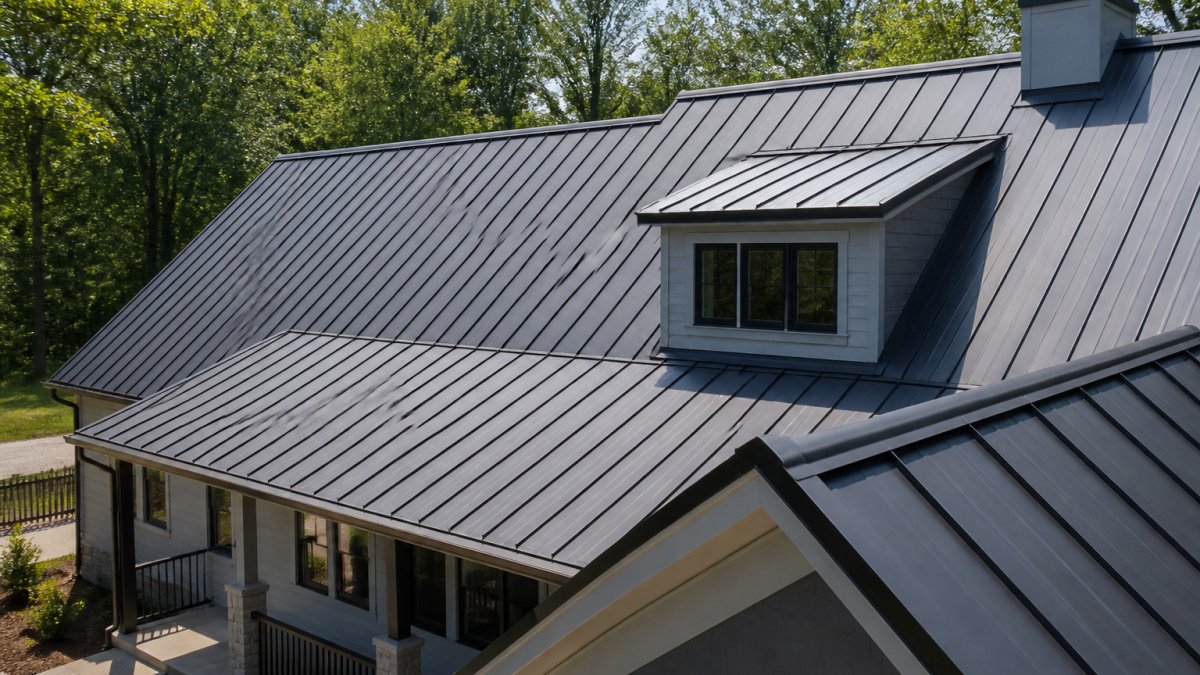
Two properties govern that transfer. Solar reflectance is how much sunlight a surface bounces back instead of absorbing. Thermal emittance is how quickly a surface releases absorbed heat back into the air. A roof that scores well on both stays cooler under direct sun and sheds heat faster after sunset.
Heat moves through a roof in two directions. In summer, radiant heat from the roof deck drives heat gain downward into the attic. In winter, warm air escapes upward through gaps and thin insulation, which is heat loss.
Solar Reflectance and Thermal Emittance Explained
Solar reflectance and thermal emittance work as a pair, and most homeowners only hear about the first. A bright, reflective surface keeps the roof cooler during the day. Thermal emittance determines how much of the remaining heat radiates away once the sun drops. Products are rated on both, and a high score on one does not guarantee the other.
Energy-Efficient Roofing Options That Fit Different Homes
No single material wins for every house. The energy-efficient roofing options below cover the three most common choices in this region, each with a different balance of reflectivity, durability, and cost.
Asphalt Shingles, Metal Roofing, and Tile Roofing Compared
| Material | Reflectivity Potential | Durability | Best For |
|---|---|---|---|
| Asphalt shingles | Moderate; cool-rated lines available | Good | Tight budgets, standard pitched roofs |
| Metal roofing | High with reflective finishes | Excellent | Long-term owners, hot exposures |
| Tile roofing | High with light or coated finishes | Excellent | Heavy load capacity, long horizons |
Cool-rated asphalt shingles generally cost less upfront than metal or tile. Metal roofing can reflect a good deal of sunlight and holds up well against weather, though it costs more and installation quality matters. Tile roofing offers strong durability and roof lifespan but requires structural capacity to carry the weight.
Cool Roof Benefits: Lower Surface Temperatures and Summer Cooling Savings
Cool roof benefits show up fastest in summer. A reflective roofing surface can run dramatically cooler than a dark asphalt roof under the same sun, and that difference reduces heat gain pushing into the attic.
The savings land on your utility bills as lower cooling costs, though how much depends on your attic insulation, ductwork, and climate. A cool roof is not a substitute for insulation.
Roof Insulation and Energy Efficiency: Sealing the Attic and Roof Deck
Roof insulation and energy efficiency are inseparable. Insulation slows heat transfer, but gaps around light fixtures, vents, and framing let air move freely past it. Air sealing closes those gaps first; insulation then performs as intended.
Watch out: insulating over an unsealed attic traps moisture and hides leaks rather than fixing them. Seal, then insulate.
Air Sealing and Roof Ventilation Working Together
Roof ventilation and attic ventilation manage moisture and temperature in the space beneath the deck. Balanced intake and exhaust keep the attic from cooking in summer and condensing in winter.
If you are inspecting attic insulation for signs of trouble, how to spot water damage in attic insulation walks through the visual checks before you commit to an upgrade.
Energy-Efficient Roof Replacement Cost and What Drives the Price
Energy-efficient roof replacement cost is not a single number. Understanding the cost structure, comparing line items across bids, and estimating payback before you sign are sound ways to protect your budget.
An energy-efficient roof replacement generally breaks into several cost categories. Reviewing each as a separate line on every bid you collect is a useful way to compare quotes:
- Tear-off and disposal. Removing the old roofing, underlayment, and fasteners, plus dumpster and landfill fees. Multiple layers of old shingles add labor and disposal cost.
- Deck repair and sheathing. Rotted or delaminated sheathing must be replaced before new material goes down. This is the most common surprise line item, and it is discovered only after tear-off.
- Roofing material. Asphalt shingles generally sit at the lower end of installed-cost ranges, while metal and tile generally sit at the upper end. Material tier is the single largest swing factor in the total.
Roof size, pitch, and complexity, valleys, dormers, chimneys, and skylights, drive labor hours more than material choice does on many homes. A steep, cut-up roof can cost substantially more to install than a simple gable of the same square footage.
Estimating Payback Before You Commit
Payback is the number of years it takes energy savings to equal the upgrade's incremental cost, the difference between a standard replacement and an energy-efficient one, not the full roof price.
A common pattern is that cool-roof reflectivity delivers its largest savings in cooling-dominated climates and on homes with ductwork and HVAC equipment in the attic. In heating-dominated climates, the winter penalty of a highly reflective roof can offset some summer gains, which is why climate-zone matching matters more than picking the most reflective product on the shelf.
Energy savings figures are estimates, not guarantees.
Incentives, Financing, and Tax Treatment
Before you finalize a bid, check three sources of offsetting cost. Utility and state rebate programs are worth checking, as availability varies by location. Third, financing options: compare the total financed cost against paying cash.
Ask any contractor you consider which incentives they will document for you.
Call the Expert Renovation Contractors Now →
If an active leak is already present, emergency roof leak repair cost explains what drives that separate expense and why it should be handled before any efficiency upgrade is priced.
How to Plan Your Upgrade: Whole-Roof Assessment and Sequencing
Sequence beats material selection every time, and the right sequence depends on your climate, your roof's orientation, and what the assessment finds. Here is the order most practitioners recommend, with the inspection checks that justify each step.
Step 1: Inspect the Full Roof Assembly, Deck to Attic Floor
Start in the attic, not on the roof. Bring a flashlight, a notepad, and a camera. Check for:
- Staining or discoloration on the deck and rafters, evidence of active or past leaks.
- Rusty nails protruding through the sheathing, a sign of condensation or chronic moisture.
- Compressed, damp, or missing insulation, especially around the perimeter where it meets the top plate.
On the roof side, check flashing at chimneys, walls, and skylights, the condition of the shingles or panels, and whether intake and exhaust vents are present and unobstructed.
Step 2: Air Seal Attic Penetrations
Seal gaps around light fixtures, wiring, top plates, and vent penetrations before adding insulation. Air sealing is usually the lowest-cost, highest-return step in the sequence, and it makes the insulation perform as intended. Use fire-rated sealant around heat-producing fixtures and never seal over a combustion appliance flue without professional guidance.
Step 3: Correct Ventilation to a Balanced Intake and Exhaust
Ventilation is not optional, and it is not the same as air sealing. Air sealing stops uncontrolled air movement through the building envelope; ventilation provides a controlled path for moisture to escape.
Watch out: adding insulation without correcting ventilation can trap moisture, create condensation on the deck, and hide leaks rather than fix them. Seal, ventilate, then insulate.
Step 4: Upgrade Insulation to Current Recommended Levels
Insulation levels are measured in R-value, and the U.S. Department of Energy publishes recommended attic R-values by climate zone. Most practitioners find that older homes fall well short of current recommendations, and that bringing attic insulation up to the recommended level is one of the most reliable efficiency upgrades available. Match the insulation type to the space, blown-in for irregular joist bays, rigid board where depth is limited.
Step 5: Install the Reflective Roofing Surface Last
The reflective surface is the capstone, not the foundation. Installing it last means the new roof sits on a corrected assembly, sealed, ventilated, and insulated, rather than a patched-over one. If the roof is near the end of its service life, replacing it as part of the same project avoids paying twice for tear-off and access.
How Climate, Orientation, and Construction Change the Plan
A single sequence does not fit every home. In hot, cooling-dominated climates, reflective roofing and attic air sealing deliver the fastest payback, and cool-roof products are most worthwhile.
Before you commit, review the maintenance requirements in this residential roof repair maintenance guide, and if you are weighing repair against replacement, our residential roofing repair service page covers what local homeowners can expect.
Trade-Offs and Failure Risks to Watch Before You Commit
Every upgrade carries trade-offs, and honest contractors name them. Metal roofing costs more upfront and demands skilled installation; poor flashing work causes leaks regardless of material quality.
Watch out: hiring on price alone is the failure mode that costs the most. Cheap installation of a good product still fails.
Before you commit, review the maintenance requirements in this residential roof repair maintenance guide, and if you are weighing repair against replacement, our residential roofing repair service page covers what local homeowners can expect.
Schedule Your Roof Assessment with B&G Home Improvement Inc.
A roof upgrade only delivers the savings and comfort you are paying for when the whole assembly is assessed and sequenced correctly. That is the standard we hold at B&G Home Improvement Inc.: a thorough consultation, a plan matched to your home and budget, and work built to last.
Call (919) 224-7615 or visit our home remodeling contractor services page to schedule your roof assessment and get a plan grounded in your actual roof, not a phone estimate.
Frequently Asked Questions
Is a new roof an energy-efficient improvement for taxes?
Federal tax credits for efficiency improvements have specific eligibility rules that change over time, so confirm current terms before assuming a roof project qualifies. Keep every receipt and talk to a tax professional before you file. State or utility rebates may also apply, so check what is available in your area before you sign a contract.
How can an energy efficient roof lower utility bills?
An energy efficient roof lowers bills in two ways. Reflective surfaces bounce sunlight away, so the roof surface stays cooler and less heat moves into the attic. Better insulation and air sealing below the roof keep conditioned air from leaking out. Together they reduce how hard your HVAC system works in summer and winter. The exact savings depend on your climate, attic condition, and current energy consumption, so ask for an assessment rather than relying on a generic percentage.
What are the benefits of installing a cool roof?
A cool roof reflects more sunlight and releases absorbed heat faster than a standard roof. That lowers roof surface temperature, reduces heat gain in summer, and helps keep indoor temperatures more consistent. Many homeowners also see less strain on their HVAC system and a longer roof lifespan because the materials expand and contract less. Cool roof benefits are strongest in sunny climates, but the right product depends on your roof slope and material.
How much does an energy-efficient roof replacement cost?
Energy-efficient roof replacement cost varies widely based on roof size, pitch, material choice, and whether insulation or ventilation work is included. Metal and tile systems usually cost more upfront than asphalt shingles, but they can last longer and deliver better energy performance. Because pricing depends on your specific home, request a written itemized quote from a local contractor so you can compare materials, labor, and any available incentives.
Your roof is either working with your HVAC system or against it. Let B&G Home Improvement Inc. assess the full assembly, sequence the upgrades that matter, and deliver a result that meets your expectations, on the timeline we agree to. Get started with B&G Home Improvement Inc. and turn your roof into part of your home's energy performance.
